Getting to Greenland
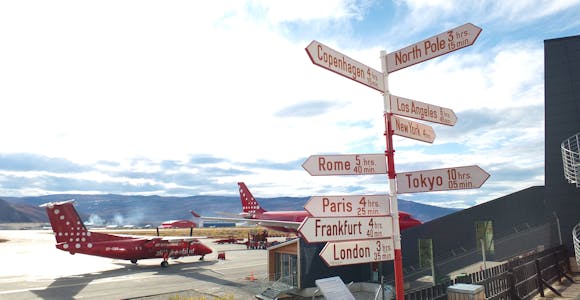
Located roughly equidistant between Europe and North America, Greenland - the world’s largest island - is well connected and relatively easy to get to, whether you are arriving …
Discover More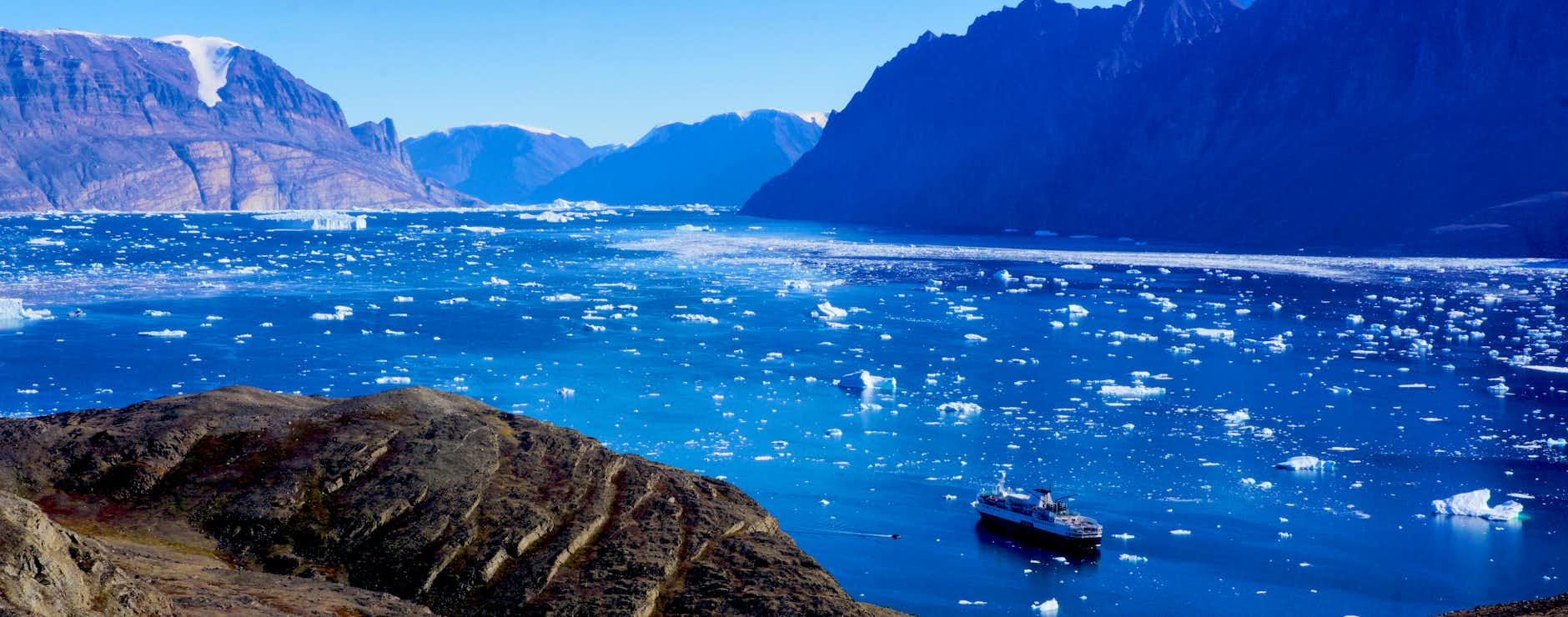
With scenery designed for giants and mind-boggling volumes of ice which predates our human impact on the world, any time spent in Greenland is life changing.
Karl ONeill Arctic Sales Specialist

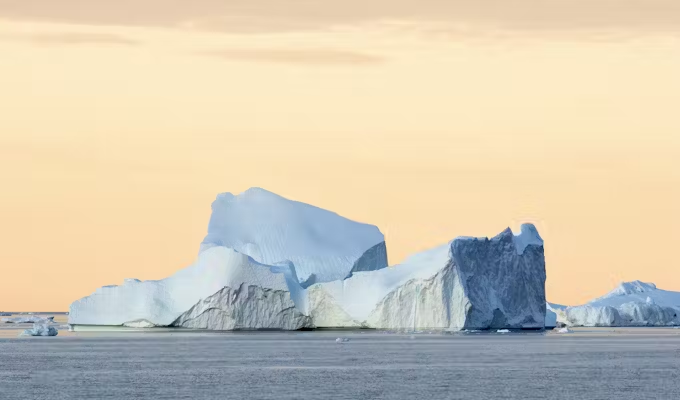
Ilulissat glacier at sunset

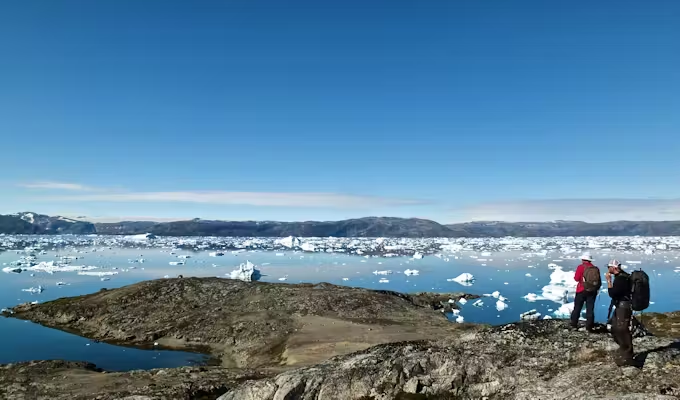
A hiker overlooks a glacial front

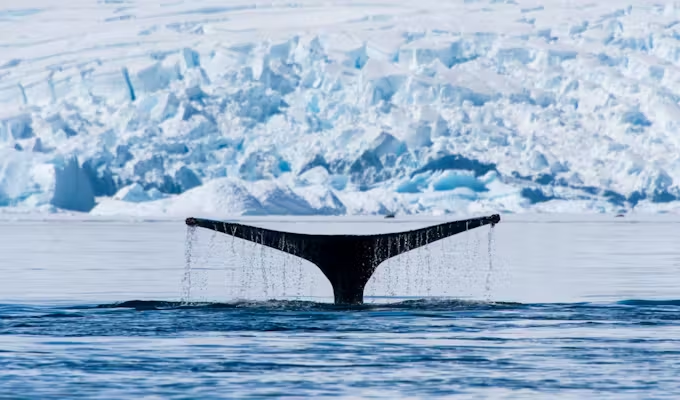
The fluke of a diving humpback whale

Northern lights over the Greenland Ice Cap in Spring

Admiring pancake ice from the bow

Sisimiut blanketed in winter snow

Muskox in the lowlands during summer

Ice sculptures in Scoresbysund

The beautiful low light of an early season sunrise

Majestic glacial ice in Disko Bay
Greenland is vast, and whether you choose to explore the wild east, populous west, or historic south coast, you can expect daily off-ship excursions showcasing the best of each distinct region.
Special Offers:Swoop has access to the widest range of offers and can help you find the right trip, cabin, & price.
Sailing in August or September, explore the massive fjords of East Greenland and their legendary icebergs, spot musk oxen and visit ancient and modern Inuit settlements. Late summer provides a great chance of spotting the Northern Lights. A choice of…

Join a 12-guest micro cruise to explore Scoresbysund in autumn. Witness the Northern Lights illuminating the fjords and discover a wild, pristine landscape on hikes across the autumnal tundra. Spot iconic Arctic wildlife like musk oxen and Arctic hares, and…

Combining the majestic landscapes of remote East Greenland and a slice of western Iceland with all the trappings of travelling aboard a state-of-the-art luxury expedition ship, this trip overdelivers on every front. Enjoy the sensory overload of Arctic landscapes during…

Embark on this epic fly and cruise 11- or 12-day expedition into the wildest, least visited corner of Greenland, which combines the labyrinthine Scoresbysund fjord system with the vast Northeast Greenland National Park. By day, navigate spectacular fjords and pass…

Combining all of the jewels in West Greenland’s crown in a single trip, we know firsthand that this epic voyage is a real cracker. Explore the iconic sites of Ilulissat, Eqip Sermia and Uummannaq, alongside the remoteness of Eternity and…

There are few wilder, more remote places on the planet than East Greenland. Travelling by a small, very comfortable custom-built expedition ship, this voyage aims to showcase the best of Greenland’s eye-popping scenery, vast ice and exotic wildlife. Walk the…
This might be a short trip but it packs a huge amount in. Sail among the ice of Disko Bay and spot humpbacks hunting herring; trek to the look out over Jakobshavn Glacier; explore the settlements of Sisimiut and Itilleq…
Stay in a specially designed seasonal safari-style camp as your base and explore this little visited land by kayak, zodiac, motor boat, helicopter or on foot. The long summer days help maximise exploration, while the rustic luxury of the camp…

East Greenland in May is still frozen and inaccessible, unless you’re travelling aboard this extraordinary icebreaker which is the only ship capable of pushing through the pack ice to explore this wild, pristine land in springtime. This is true polar…
Navigating Greenland’s remote coastlines reveals an unforgettable landscape of raw Arctic majesty. Ships glide through massive, labyrinthine fjords lined with towering granite peaks.
Along the way, giant glaciers carve their path to the sea, regularly releasing colossal icebergs that drift in brilliant shades of white and electric blue.
Stepping ashore, guided hikes across the vast tundra offer a completely different view. Trekking on permafrost and a carpet of mosses, past colourful Arctic wildflowers, you might spot roaming musk oxen or Arctic foxes.

The vast Greenland wilderness
For anyone looking to experience ‘Big Ice’ on a truly grand scale, look no further as Greenland aces this whole category.
From the vast, glittering Greenlandic ice sheet itself covering the majority of the country, to west Greenland’s Jakobshavn Glacier - the most productive in the northern hemisphere in terms of iceberg output - ice and icebergs are a key defining central theme of Greenland.

Around 1000 AD, the ancestors of today's Inuit migrated to Greenland, mastering the Arctic through whaling, kayaks, and dog sleds. As a marine people reliant on the sea, most live in coastal towns like the capital, Nuuk.
Though Danish colonisation and post-WWII modernisation introduced permanent homes and Western schools, Inuit culture remains deeply rooted in traditional values. Resourcefulness, storytelling, and subsistence hunting endure alongside modern life.
Today, local guides share this unique heritage through dog sledding, hiking, and legend-telling, offering visitors an authentic look at a resilient culture that beautifully blends ancient traditions with contemporary Arctic living.
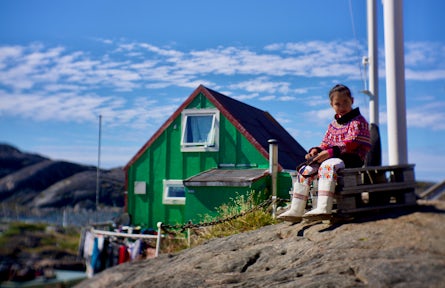
Greenlandic Inuit community
For anyone who seeks that true pioneering spirit of adventure when they travel, Greenland has to be on your Bucket List. It really is the coolest place on earth.
Alex Mudd Head of Swoop Arctic
While Greenland can boast of having extraordinary wildlife, sightings are typically rarer than in other parts of the Arctic due to the vast scale and their shyness.
On land, you will be very lucky to see a polar bear, as they typically roam Greenland’s remote corners. The charismatic musk ox is much more regularly sighted, alongside arctic hare and fox.
Greenland’s rich waters offer spectacular whale sightings - humpbacks, minke and fin whales in particular - and at times in considerable numbers. Greenland is also one of the best places to see narwhal, the unicorn of the sea, however sightings are rare and usually fleeting.
.JPG?auto=format,enhance,compress&fit=crop&crop=entropy,faces,focalpoint&w=0&h=288&q=60)
A herd of musk oxen
Whether you see the Northern Lights depends on the timing of your cruise. In the high summer (June to August) you won't see them due to the constant 24 hours of daylight.
The best chances for experiencing the extraordinary Aurora Borealis are on a September voyage when the early-autumn nights are rapidly drawing in and provide the ideal conditions.
From our personal experience Greenland is a particularly good place for seeing the Northern Lights, especially if you're after a really stunning light show.

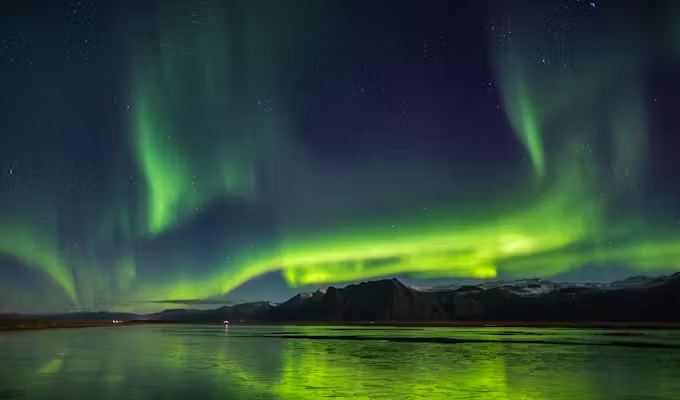
The spectacular North Lights
For the photographer, Greenland’s sublime vistas, ethereal icescapes and pretty communities offer opportunities at almost every turn.
It's a ravishingly beautiful region with absolutely zero risk of boredom for anyone interested in photography.
And for keen trekkers and kayakers, Greenland holds no less attraction. Scoresby Sund’s autumnal tinged flanks in particular offer incredible walking over decent distances, while Greenland is the home of the kayak, and its waters are thrilling to navigate for the experienced kayaker.

Kayaking amongst icebergs in Greenland
Located roughly equidistant between Europe and North America, Greenland - the world’s largest island - is well connected and relatively easy to get to, whether you are arriving …
Discover More
In the absence of hotels, exploring Greenland by ship provides unparalleled access to its remote coastlines and icy fjords. Greenland offers a wide choice of ships to choose from, …
Discover More
With planned daily excursions accompanied by your team of polar experts, expect active exploration on foot and by zodiac - from slaloming between icebergs, learning about the rich …
Discover More
Greenland wears very different cloaks depending on when you choose to visit: spring, summer or autumn. Each has its own enchanting characteristics making it tough to decide which …
Discover MoreVoyages to Greenland operate between June and early-September. This is when the opening up of the ice allows passage along the coastline. However, East Greenland cruises, and those which visit Canada's Northwest Passage, are only in late August and September.
Both east and west Greenland offer dedicated cruises exploring these coastlines. Choose west Greenland for more community visits and iceberg-strewn Disko Bay, while east Greenland majors in true wilderness and being one of the most remote places on the planet.
Special Offers:Swoop has access to the widest range of offers and can help you find the right trip, cabin, & price.
Sailing in August or September, explore the massive fjords of East Greenland and their legendary icebergs, spot musk oxen and visit ancient and modern Inuit settlements. Late summer provides a great chance of spotting the Northern Lights. A choice of…
Embark on this epic fly and cruise 11- or 12-day expedition into the wildest, least visited corner of Greenland, which combines the labyrinthine Scoresbysund fjord system with the vast Northeast Greenland National Park. By day, navigate spectacular fjords and pass…
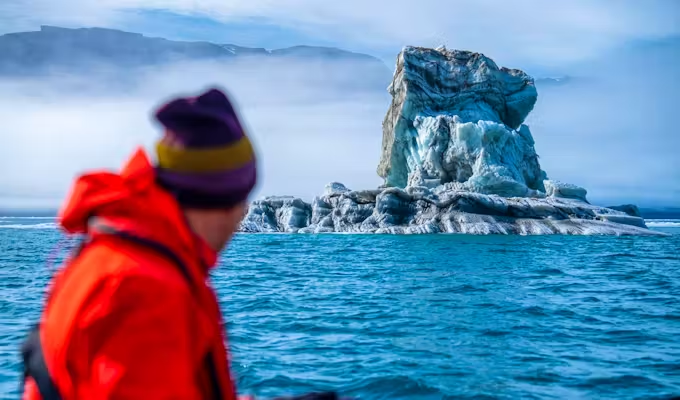
Exploring East Greenland doesn't get any easier. A short charter flight from Iceland saves you time and a potentially rough crossing of the Denmark Strait. On arrival, embark your small, expeditionary sailing ship and spend the next nine full days…

This sweeping voyage stands out for its in-depth exploration of South and West Greenland, from the Norse legends of southern Greenland to Ilulissat’s mighty icefjord and Disko Island on the west coast. Travelling by luxury expedition ship offering multiple dining…
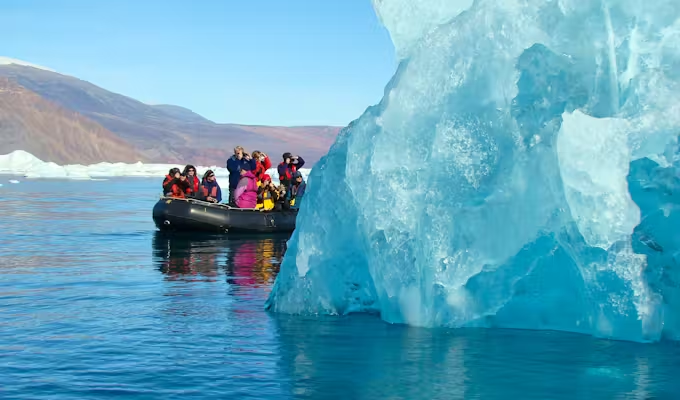
Exploring East Greenland’s wild, dramatic coastline on board a small, custom-built polar ship, this is expedition cruising at its very best. Hike the autumnal tundra in search of musk oxen during the day, with a strong chance to see the…

East Greenland is little-travelled in the summer months, so an extended trip in May when this coastline is still gripped by ice is even rarer. Travelling onboard the world’s most advanced icebreaker ship allows you to cut through the ice…
Join a 12-guest micro cruise to explore Scoresbysund in autumn. Witness the Northern Lights illuminating the fjords and discover a wild, pristine landscape on hikes across the autumnal tundra. Spot iconic Arctic wildlife like musk oxen and Arctic hares, and…
Start off in Akureyri, then cross the Arctic Circle as you sail north across the Denmark Strait and along Greenland's immense eastern coastline. The final leg of the voyage is across the Greenland Sea to Longyearbyen. This is a truly…
East Greenland in May is still frozen and inaccessible, unless you’re travelling aboard this extraordinary icebreaker which is the only ship capable of pushing through the pack ice to explore this wild, pristine land in springtime. This is true polar…

Discover the vast landscapes and enormous icebergs of Scoresbysund in East Greenland. Visit tiny remote communities and trek in pristine wilderness then spend the night watching the Northern Lights above…
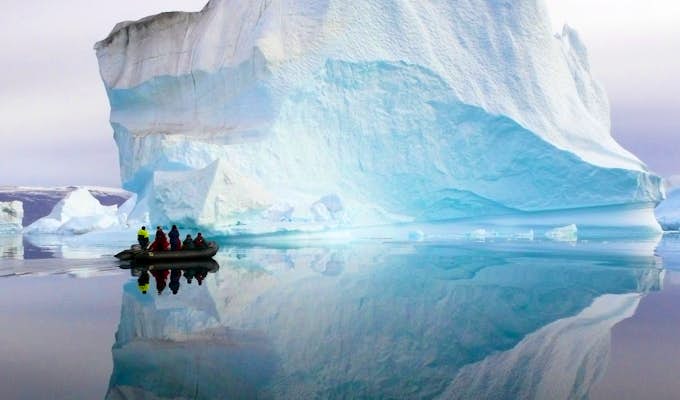
This is a rare chance to explore Greenland’s little-travelled southeastern coastline. From the rich Viking heritage in the south to the ice-choked waters and pretty Inuit communities further north, highlights include the spectacular Prince Christian Sound and the iceberg-strewn Sermilik…
One of very few voyages to explore Southern Greenland in depth, expect big ice, Viking history, dramatic scenery and humpback whale sightings. Then journey on to the west coast, delving into Greenlandic culture in the capital city, and visiting the…

This 16-day voyage is one of only a few that ventures as far as 78° North. Perfect for explorers, this journey navigates the remote Smith Sound and journeys to the rarely visited community of Upernavik. Follow in the footsteps of…
Combining all of the jewels in West Greenland’s crown in a single trip, we know firsthand that this epic voyage is a real cracker. Explore the iconic sites of Ilulissat, Eqip Sermia and Uummannaq, alongside the remoteness of Eternity and…

While the majority of east Greenland voyages head further north, we love the spirit of exploration and contrariness of this voyage, which takes the path less travelled by focusing instead on Greenland’s little-visited southeast corner. Zodiac cruise and kayak among…
This might be a short trip but it packs a huge amount in. Sail among the ice of Disko Bay and spot humpbacks hunting herring; trek to the look out over Jakobshavn Glacier; explore the settlements of Sisimiut and Itilleq…
While Greenland has more than enough appeal on its own, combining East Greenland and its near neighbour, Svalbard, makes for a spectacular longer cruise of great contrast and variety.
Special Offers:Swoop has access to the widest range of offers and can help you find the right trip, cabin, & price.

This extraordinarily varied two-centre combination Arctic voyage not only consistently overdelivers, but it's also sensibly priced for all you will experience. Travelling onboard an elegant, sturdy older ship, any shortcomings it may have in the luxury amenities department are more…
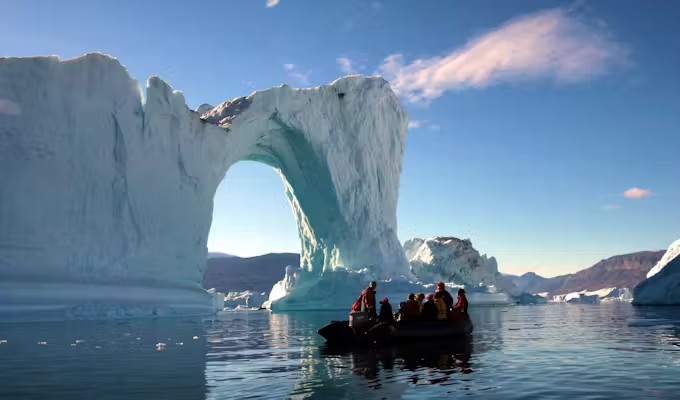
Beginning deep inside the High Arctic and finishing in subarctic Iceland, we like this voyage for its diversity, sense of journey and extended time exploring East Greenland. Zodiac cruising among towering icebergs, glimpsing the Northern Lights and tracking musk oxen…

Experience the best of two contrasting Arctic regions as they get ready for summer. Beginning in Reykjavík, this audacious voyage by expeditionary icebreaker ship arches north across the Arctic circle following the dramatic, ice-choked coastline of east Greenland, before steering…
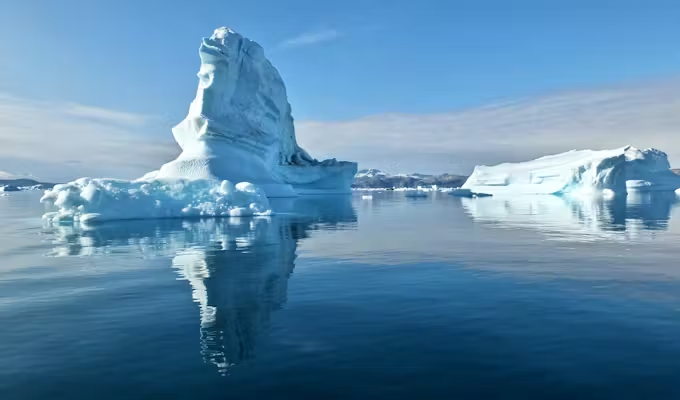
Beginning in Svalbard before sailing west across the Greenland Sea and exploring Greenland’s long eastern coastline to finish in Iceland, this is an audacious Arctic journey of startling diversity and contrast. Spectacular landscapes, towering glaciers and once-in-a-lifetime wildlife encounters all…
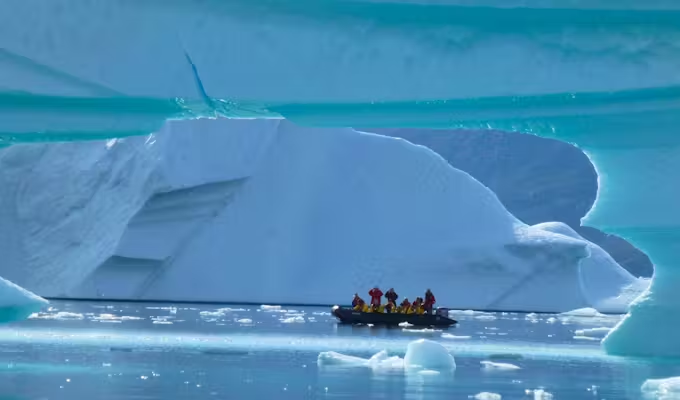
Introductions to the High Arctic don’t come much better. Traverse wildlife-rich Svalbard via East Greenland’s towering icebergs and autumnal tundra, then continue on to Iceland. Aurora sightings are possible at any point.…
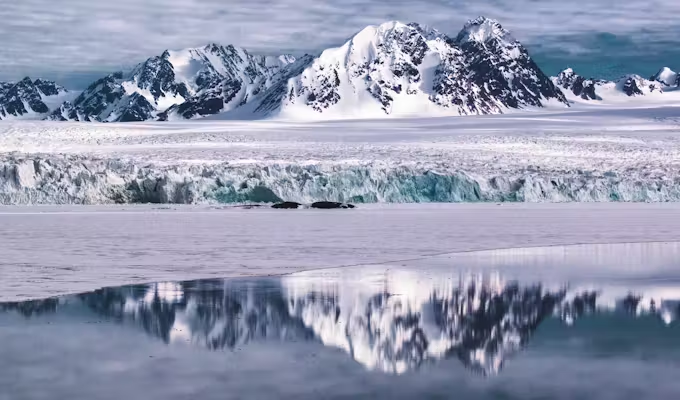
This comprehensive Arctic triumvirate encompassing Svalbard, East Greenland and Iceland offers the best of the Arctic: some of the best wildlife viewing with spectacular scenery, unspoiled fjords, gigantic icebergs and Inuit communities. You may also be lucky enough to see…

Embark on this epic, sweeping Arctic odyssey spanning Svalbard's rich wildlife, remote Jan Mayen, Greenland's rugged east coast, and Iceland's stunning western fjords. Explore isolated settlements, hike the tundra, kayak among glowing icebergs, and search for polar bears, walrus, fox,…
Divided by a short sail across the Davis Strait, combining the spectacular coast and picturesque villages of West Greenland with the wildlife and history of the Canadian Arctic works brilliantly.
Special Offers:Swoop has access to the widest range of offers and can help you find the right trip, cabin, & price.

Combining little-visited southeast Baffin Island with the towering icebergs and charming communities of West Greenland, this is an unusual and fascinating exploration of two very different Arctic regions divided by Baffin Bay. Sailing on an all-inclusive luxury polar ship, with…

True adventurers wanted! Spend 11 whole days exploring the remote, virtually unvisited borderlands where Greenland and the Canadian Arctic meet. No other expedition ship travels this far north. Flying from Ottawa to Resolute, you’ll sail historic waterways, explore glacier-carved islands…

For an extraordinary Arctic introduction, join this unique full circumnavigation of Baffin Bay’s icy waters aboard a comfortable, state-of-the-art expedition ship. Travelling clockwise, you will navigate deep fjords, witness towering icebergs and explore remote sites. Venturing further north than almost…
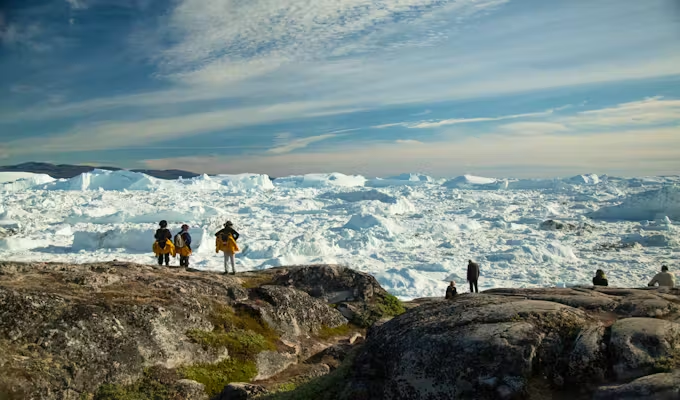
Spending time exploring Canada’s historic Northwest Passage and West Greenland, we like this voyage’s balance and variety as much as exploring little visited spots such as Thule, one of the northernmost towns in the world, and Smith Sound. Big ice,…
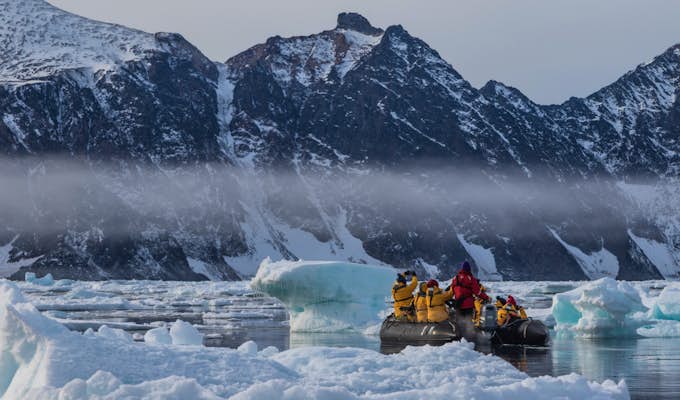
This comprehensive westbound voyage stands out for its compelling combination of West Greenland, the east coast of Baffin Island and the historic Northwest Passage. Jaw-dropping scenery, towering icebergs, thrilling wildlife encounters, Inuit community visits and fascinating history pervade this epic…

We love this voyage for its breathtaking variety – landscape, wildlife, habitat and culture – as you journey south from the icy home of the Inuit, through the boreal forest belt, to finish in Newfoundland, with its Viking and Celtic…
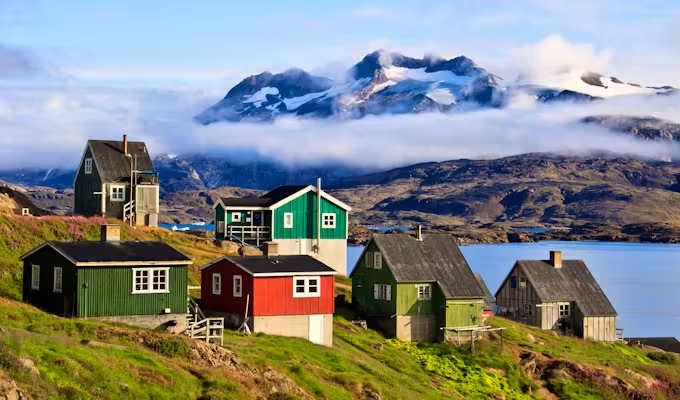
West Greenland has a spectacular coastline dotted with pretty, colourfully-painted villages. Many voyages start and end in the settlement of Kangerlussauq, which sits at the head of a stunning fjord and close to the ice cap. It boasts a long airport runway and is the most populated region of Greenland. It's also a great place from which to start or end a Northwest Passage voyage.
The west coast is also home to the capital Nuuk, where you can discover the UNESCO world heritage site of Ilulissat Icefjord, with its huge icebergs and picturesque settlements.
These waters are rich in nutrients that nourish the countless whales and seals which call this home in the summer months.

Admire West Greenland's colourful houses
This is Greenland's wild side. Sparsely populated and lacking significant infrastructure, exploring the East of Greenland by any means other than boat is a challenge. You'll discover pristine landscape, sumptuous fjords and ice, all on a truly epic scale.
For the 3,500 residents of East Greenland, life has not changed significantly since the arrival of the Thule people. There is always a friendly welcome and a chance to learn about their customs while you explore this land of ice and mountains.
Expeditions in East Greenland usually focus on Soresbysund fjord and are often combined with travel to Iceland and Svalbard; making for a truly spectacular Arctic experience.
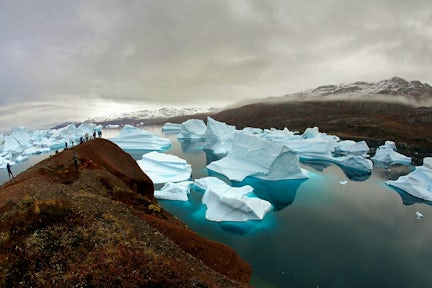
Electric blue icebergs in Scoresby Sund, East Greenland
Perhaps the most verdant region of Greenland, South Greenland is commonly referred to as the 'Garden of Greenland'. Eric the Red is said to have first landed here, naming the country as he did.
Southern Greenland is steeped in history, with beautiful fjords and colourful valleys offering amazing trekking experiences for the active explorer. There are even hot springs to relax in at the end of a long trek.
The culture is also distinct. Small farming communities are joined by dirt tracks and hiking trails.
Expeditions in South Greenland often start in Iceland and continue on to West Greenland.
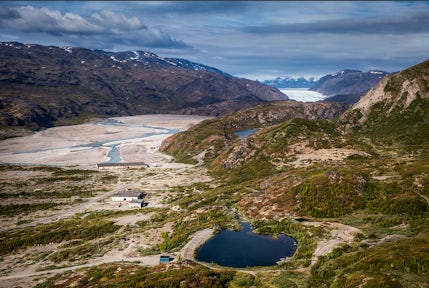
Narsarsuaq, South Greenland
Each region of Greenland is distinct, but in brief:
East Coast: Very wild and unpopulated. Perfect for those in search of true wilderness. Better chances of seeing wildlife than in the west, but limited.
West Coast: A spectacular coastline dotted with pretty, colourfully-painted villages. Good chance of seeing whales. Highlights include the capital, Nuuk, and the mighty Ilulissat Icefjord.
South Coast: First settled on by the Vikings, making it perfect for history buffs, a warmer climate and farming gives the south a totally different feel to the rest of the island.
Cruises to Greenland operate during the summer months between June and early September when the opening up of the ice allows passage along the coastline.
However, East Greenland cruises and those combining with Canada's Northwest Passage only operate in late August and September.
It depends on the timing of your cruise. Due to the constant 24 hours of daylight in high summer (June to August), you won't get to see them.
The best chances for experiencing the extraordinary Aurora Borealis are on a September cruise when the rapidly drawing in nights of early autumn provide the ideal conditions.
Greenland’s visa regulations are the same as those that apply in Denmark. The good news is that no visa is required for EU, US, Canadian or Australian nationals.
We'll spend some time listening to your aspirations, then discuss the kind of experience that might suit you.
Next we'll discuss the options, shortlist the best trips for you and present you our impartial recommendations.
We'll place a 24 hour hold on your preferred option - without obligation - whilst we talk through the details.