Arctic Cruises
Expeditionary cruising is a very practical way to discover the Arctic, allowing you to comfortably explore often untouched areas of wilderness you can’t otherwise reach from …
Discover More
It never gets old. Even the locals will head outside in awe when the auroras start to dance. Standing bathed in the green and purple light, it’s easy to understand why historical cultures believed they were in the presence of the gods.
Alex Mudd Head of Swoop Arctic
Talking to Swoop made all the difference for us. Being able to cut through all the detail to find the perfect trip for us was invaluable. Alex was able to ask us the questions that helped us crystallise what we actually wanted from such a trip. These trips aren't cheap so you want to be sure you're going to get something that's right for you. Swoop made that happen for us. Read the full review
Travelled: July 2018
Kay & Richard Howells (Baker) - United Kingdom
Faultless service, as always in our experience. We knew the ship and even the cabin beforehand, but great to have Swoop’s help in setting it up and talking us through the options for the choice of voyage and extras. Read the full review
Travelled: July 2018
Steve & Tina O'Shea - United Kingdom
Anywhere sufficiently far North and away from cities and light pollution. We love Churchill, Manitoba and East Greenland in particular.
Incredibly, yes! Just a few years ago, only the best DSLR camera setups could capture the lights, and even then it was tricky. It’s now surprisingly easy to capture the Northern lights on your phone. Some will need to activate ‘night mode’ so make sure you know how to.
There’s no set answer to this question as it depends on so many factors, like weather, auroral activity and location. But most importantly 'are you outside looking?'. The more time you spend out and actually looking for them, the greater your chances of success. Even on cloudy nights, a little gap in the cloud cover might appear and the ‘green glow’ could pour through.
This is a really great question. Put simply: They can be. It’s important to remember that the pictures you see are the ones that people want to show. Depending on the auroral activity, you may just see a pale green haze, or the whole sky might explode in greens and purples. No two experiences are the same, it's just no one is uploading the pale green haze photos! Approach it with an open mind and enjoy the experience that nature gives you.
Special Offers:Swoop has access to the widest range of offers and can help you find the right trip, cabin, & price.
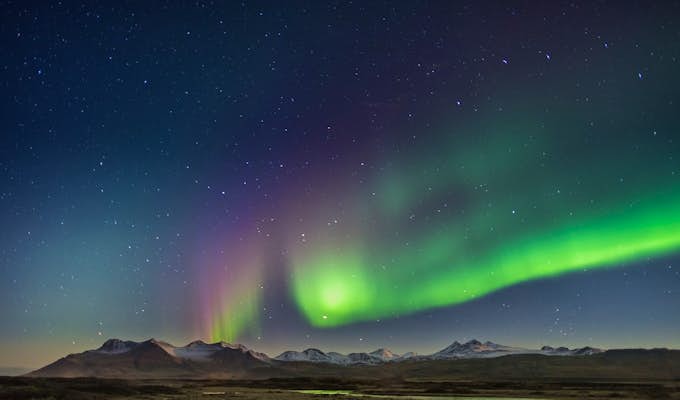
Winter in Hudson Bay is cold but also very dry and that means clear skies and at this latitude that is perfect for spotting the northern lights from a variety comfortable, heated viewing platforms. Day time activities include dog sledding…

Embark on this epic fly and cruise 11- or 12-day expedition into the wildest, least visited corner of Greenland, which combines the labyrinthine Scoresbysund fjord system with the vast Northeast Greenland National Park. By day, navigate spectacular fjords and pass…
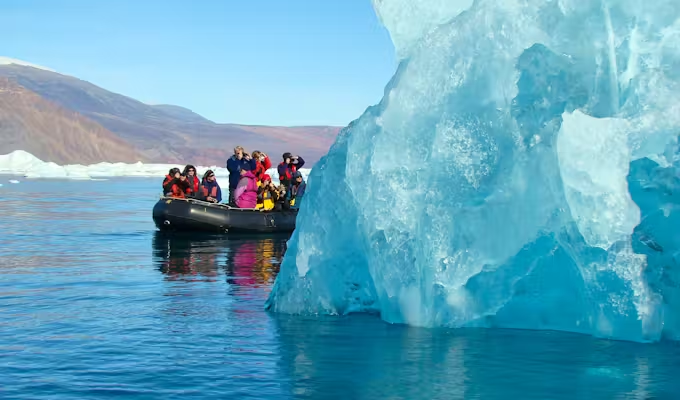
Start off in Akureyri, then cross the Arctic Circle as you sail north across the Denmark Strait and along Greenland's immense eastern coastline. The final leg of the voyage is across the Greenland Sea to Longyearbyen. This is a truly…
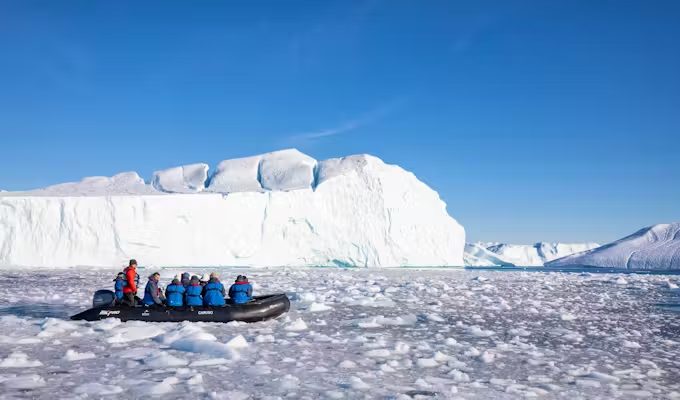
Beginning in Cambridge Bay, this westbound-arching route encapsulates the best that the Northwest Passage and West Greenland have to offer. Thread your way through the icy labyrinth of staggering landscapes, dramatic history, remote Inuit settlements and charismatic Arctic wildlife, with…
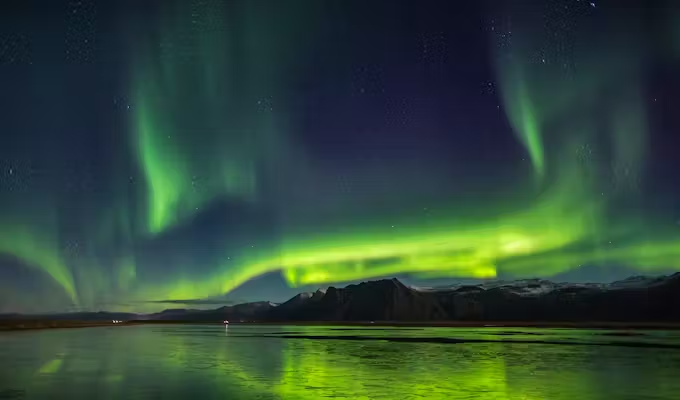
Sailing in August or September, explore the massive fjords of East Greenland and their legendary icebergs, spot musk oxen and visit ancient and modern Inuit settlements. Late summer provides a great chance of spotting the Northern Lights. A choice of…
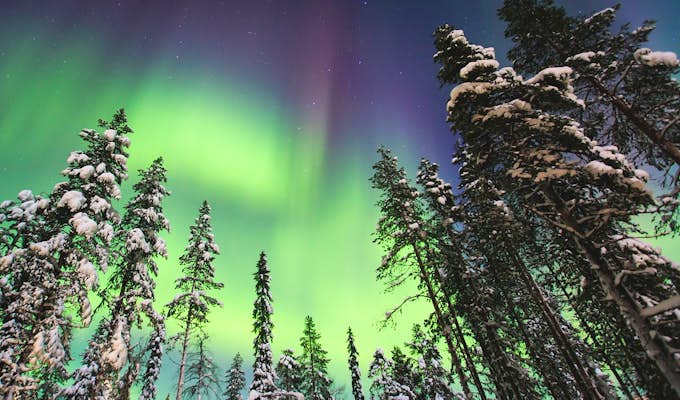
Head north to Churchill, renowned for its high auroral activity, and capture images of the ethereal Northern Lights. Accompanied by an expert photographer, evening aurora sightings are maximised using multiple, heated vantage points while you wait in anticipation. By day,…

Focused on East Greenland’s Ammassalik region, specifically the incredible ice-choked Sermilik Fjord, this trip offers the best of this entire coastline in microcosm. Travelling slowly in a rarely visited area, maximising time off ship to hike and explore the tundra,…
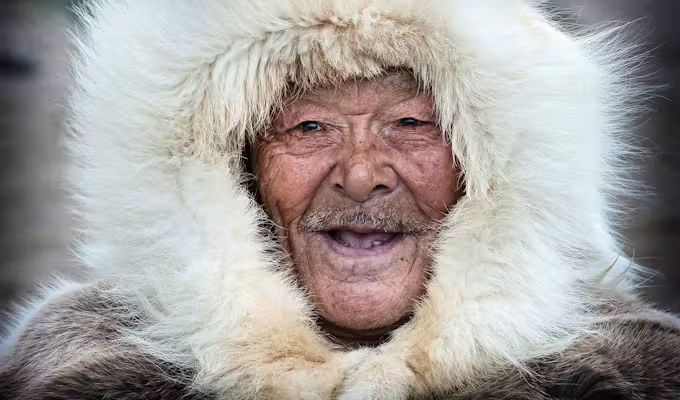
Traversing west to east this voyage takes you to iconic sites such as Cambridge Bay, Lancaster and Smith Sounds and Ellesmere Island, before exploring the fjords and towns of West Greenland. Bears, narwhal, musk ox, beluga and northern lights are…

Long before scientists explained the aurora, people across the North looked to the night sky and wondered what was happening above them. In Finnish folklore, the lights were said to be caused by a magical fox sweeping its tail across the snow, scattering sparks into the sky. The Sámi have their own rich traditions surrounding the aurora, with beliefs varying between communities and generations, and often treating the lights with great respect.
Across parts of Greenland and the wider Arctic, Inuit traditions have described the lights in connection with spirits, ancestors and games played in the heavens. In Norse mythology, the aurora has sometimes been linked to the Bifröst, the shimmering bridge connecting the human world with the realm of the gods.
Today we know the science behind the spectacle, but perhaps the old stories capture something the science cannot: just how strange, powerful and magical the Northern Lights can feel.

Expeditionary cruising is a very practical way to discover the Arctic, allowing you to comfortably explore often untouched areas of wilderness you can’t otherwise reach from …
Discover More
Choosing to visit the Arctic is the easy part, but what can you expect to do and see once you arrive? From daily zodiac safaris, guided shore landings, insightful lectures and …
Discover More
The Arctic is one of the most diverse wildlife habitats on Earth, harbouring a vast array of animals adapted to the extreme cold. Polar bears and walrus can be spotted on the sea …
Discover More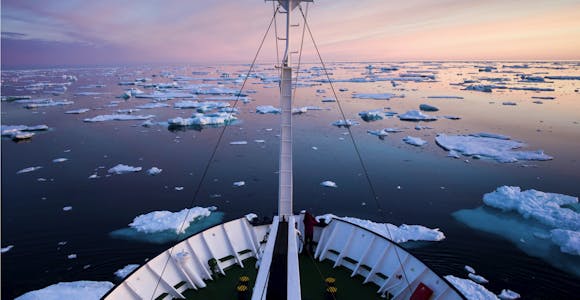
We partner with selected ice-strengthened Arctic expedition vessels from small yachts and nimble little ships with convivial atmospheres, to larger Russian research boats and …
Discover More
Watching the lights from the warm indoors

The Northern Lights dancing among the stars

Northern lights over the Greenland Ice Cap in Spring

Northern lights over Greenland

Northern lights over the Churchill tundra

Aurora over the Canadian Arctic

The Northern Lights illuminating the Arctic sky
We'll spend some time listening to your aspirations, then discuss the kind of experience that might suit you.
Next we'll discuss the options, shortlist the best trips for you and present you our impartial recommendations.
We'll place a 24 hour hold on your preferred option - without obligation - whilst we talk through the details.