When to visit the Northwest Passage
There’s very good reason why the Northwest Passage is only open to visitors in August and September: it's the only time average temperatures are above freezing, and the ice has …
Discover More
Some of the best days for me in the Northwest Passage were the less obvious ones. Time in the ice shrouded in fog with no idea of where the nearest land is was a huge insight as to what it must have been like for early explorers.
Alex Mudd Head of Swoop Arctic
Special Offers:Swoop has access to the widest range of offers and can help you find the right trip, cabin, & price.
The big ice and small towns of West Greenland provide a stunning start to this trip before you sail across the Davis Straight to Baffin Island and enter the Northwest Passage. Blend history, scenery and wildlife; pay your respects at…
Spending time exploring Canada’s historic Northwest Passage and West Greenland, we like this voyage’s balance and variety as much as exploring little visited spots such as Thule, one of the northernmost towns in the world, and Smith Sound. Big ice,…

Embark on an epic voyage through the fabled Northwest Passage, sailing from Nome to Nuuk. Alongside your expert Expedition Team, you will encounter spectacular wildlife, UNESCO-listed treasures, and vibrant Inuit settlements. From the thrill of remote exploration to the stunning,…

Set sail on this in-depth, luxury 20-day cruise of west Greenland and the legendary Northwest Passage. Travelling deep into the icy labyrinth of the Northwest Passage, encounter Inuit culture, retrace Franklin’s footsteps and witness Arctic wildlife – musk ox, polar…
Traversing west to east this voyage takes you to iconic sites such as Cambridge Bay, Lancaster and Smith Sounds and Ellesmere Island, before exploring the fjords and towns of West Greenland. Bears, narwhal, musk ox, beluga and northern lights are…

This is a fabulous introduction to the best of the Canadian High Arctic, incorporating an in-depth exploration of Baffin Island and the mythical Northwest Passage – with time also in West Greenland. From dramatic glacier-carved scenery and wildlife encounters, to…

Embark on one of the world’s most iconic journeys – a full transit through the fabled Northwest Passage from Alaska to Greenland, following in the footsteps of the intrepid early explorers. What makes this particular voyage even more special is…
Beginning in Cambridge Bay, this westbound-arching route encapsulates the best that the Northwest Passage and West Greenland have to offer. Thread your way through the icy labyrinth of staggering landscapes, dramatic history, remote Inuit settlements and charismatic Arctic wildlife, with…
In the labyrinthine icy channels of the legendary Northwest Passage, explore the islands and channels that form Canada’s High Arctic region. Meet local indigenous people, encounter enigmatic Arctic wildlife – including walruses, beluga whales, polar bears, musk oxen and the elusive…
A full transit of the Northwest Passage is a truly epic undertaking, travelling in the footsteps of legendary explorers Amundsen, Franklin and Larsen. This voyage is distinguished by the small, nimble and comfortably appointed expedition ship you'll travel on, with…

Follow in the footsteps of legendary explorers on a magnificent voyage from Greenland, attempting to transit the fabled Northwest Passage toward Alaska. Alongside your expert Expedition Team, you will discover UNESCO-listed sites, abundant wildlife, and vibrant Inuit settlements. This journey…
Faultless service, as always in our experience. We knew the ship and even the cabin beforehand, but great to have Swoop’s help in setting it up and talking us through the options for the choice of voyage and extras. Read the full review
Travelled: July 2018
Steve & Tina O'Shea - United Kingdom
The Northwest Passage is a sea route connecting the North Atlantic and Pacific Oceans via waterways through the islands of the Canadian Arctic Archipelago. For centuries explorers sought the existence of a navigable passage. However, it wasn’t until the period of 1903–1906 when the Norwegian, Roald Amundsen, proved it with the first successful transit.
For many, the history is enough to entice them to this region. That might be to follow in the footsteps of Franklin by visiting Beechey Island, or to explore the remains of sod houses left by Inuit families.

Graves of explorers on Beechey Island
This part of the Canadian Arctic has a thriving wildlife population and is home to all of the 'Arctic Big Five': polar bears, beluga, musk ox, walrus and narwhal. Wildlife spotting will be an integral part of your trip through the Northwest Passage and a good sighting can change the plan for the day.
As the ice recedes in summer and the channels open up, whales, seals and walrus follow rich lines of food. Add the wealth of birdlife throughout the region, and there is always something to spot from the bridge or deck of the ship.
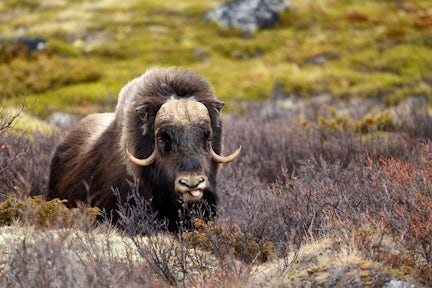
Muskoxen on the Greenlandic tundra
For many the best part of any Northwest Passage voyage are the daily landings off the ship, accompanied by your knowledgeable expedition staff: walking the tundra, observing wildlife from a zodiac, learning about life on the edge of the habitable world during community visits. This is your opportunity to really get under the skin of the region and experience it firsthand.
Well-known sites such as Beechey Island, Victory Point, Crocker Bay, Fort Ross and Dundas Harbour all have their fascinating stories to tell.

Visiting historic Dundas Harbour
You will also have the chance to explore some of the communities who call this remote corner of the globe home.
Pond Inlet is one of the most widely heard of communities and quite often features on some voyage routes, as does Gjoa Haven further south, where Amundsen over-wintered during his epic pioneering full transit of the passage.
These landings are a privileged opportunity to meet the welcoming locals and learn about their unique culture and some of the challenges of living in this extreme environment.

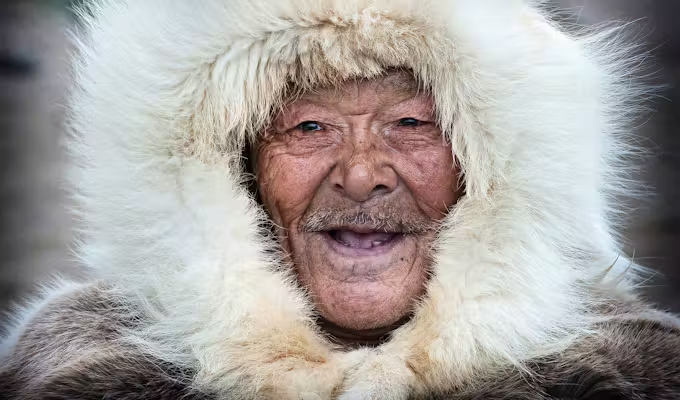
A resident of Gjoa Haven
The search for the Northwest Passage is one of the greatest stories in the annals of exploration, capturing the imagination for generations. This watery labyrinth is incredibly rich in wildlife and Inuit culture.
There’s very good reason why the Northwest Passage is only open to visitors in August and September: it's the only time average temperatures are above freezing, and the ice has …
Discover More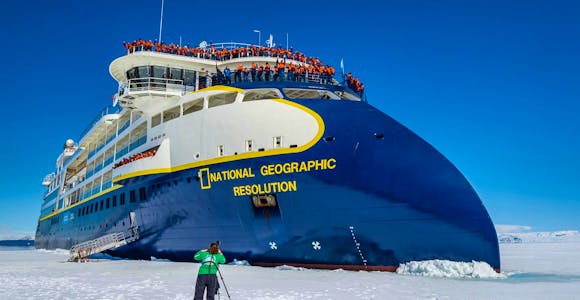
Exploring by expedition ship provides unparalleled access to the remote coastlines, icy channels and scattered communities of the Northwest Passage. Given the distances and typical…
Discover More
The Northwest Passage is best known for its dramatic history, but its waterways and islands are also home to six of the Arctic's most iconic wildlife. You'll have the chance to see…
Discover More
Exploring the Arctic on board an expedition vessel is a fully immersive and educational experience of which the daily landings are a key component. From the thrill of encountering …
Discover MoreThese shorter voyages (16–17 days) undertake a partial transit, cherry-picking the key areas of the western part of the Northwest Passage, around Lancaster Sound, though some explore further south. Fully immersive and well suited to anyone not wanting to commit to a much longer full transit.
Special Offers:Swoop has access to the widest range of offers and can help you find the right trip, cabin, & price.
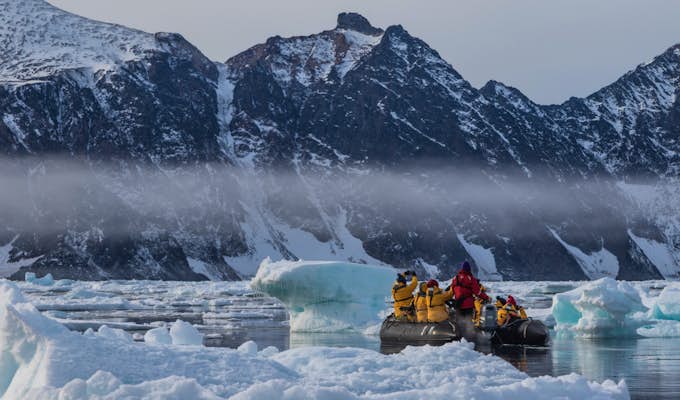
This comprehensive westbound voyage stands out for its compelling combination of West Greenland, the east coast of Baffin Island and the historic Northwest Passage. Jaw-dropping scenery, towering icebergs, thrilling wildlife encounters, Inuit community visits and fascinating history pervade this epic…
Spending time exploring Canada’s historic Northwest Passage and West Greenland, we like this voyage’s balance and variety as much as exploring little visited spots such as Thule, one of the northernmost towns in the world, and Smith Sound. Big ice,…
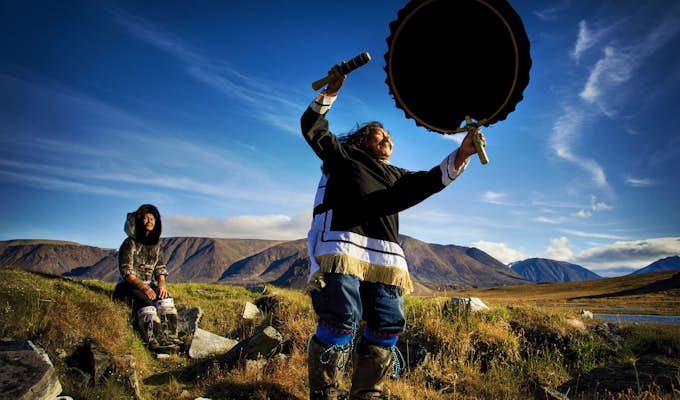
Visits to Canadian and Greenlandic communities Inuit history and culture are at the core of this journey, among those stops both Kinngait, the centre of Inuit Art and Nuuk, Greenland's capital are included. There's plenty of wildlife opportunities too with…
Beginning in Cambridge Bay, this westbound-arching route encapsulates the best that the Northwest Passage and West Greenland have to offer. Thread your way through the icy labyrinth of staggering landscapes, dramatic history, remote Inuit settlements and charismatic Arctic wildlife, with…
In the labyrinthine icy channels of the legendary Northwest Passage, explore the islands and channels that form Canada’s High Arctic region. Meet local indigenous people, encounter enigmatic Arctic wildlife – including walruses, beluga whales, polar bears, musk oxen and the elusive…
The big ice and small towns of West Greenland provide a stunning start to this trip before you sail across the Davis Straight to Baffin Island and enter the Northwest Passage. Blend history, scenery and wildlife; pay your respects at…
Traversing west to east this voyage takes you to iconic sites such as Cambridge Bay, Lancaster and Smith Sounds and Ellesmere Island, before exploring the fjords and towns of West Greenland. Bears, narwhal, musk ox, beluga and northern lights are…
For those travellers wanting to undertake an epic, full Northwest Passage transit, from Baffin Bay to the Pacific Ocean, these longer voyages (23–29 days) offer a good choice, depending on the style and size of ship you prefer.
Special Offers:Swoop has access to the widest range of offers and can help you find the right trip, cabin, & price.
Embark on one of the world’s most iconic journeys – a full transit through the fabled Northwest Passage from Alaska to Greenland, following in the footsteps of the intrepid early explorers. What makes this particular voyage even more special is…
A full transit of the Northwest Passage is a truly epic undertaking, travelling in the footsteps of legendary explorers Amundsen, Franklin and Larsen. This voyage is distinguished by the small, nimble and comfortably appointed expedition ship you'll travel on, with…
Embark on an epic voyage through the fabled Northwest Passage, sailing from Nome to Nuuk. Alongside your expert Expedition Team, you will encounter spectacular wildlife, UNESCO-listed treasures, and vibrant Inuit settlements. From the thrill of remote exploration to the stunning,…
Yes it will, however, with the sadly increasing summer temperatures in the Arctic and resultant melting of the ice, successfully transiting the Northwest Passage is now all but guaranteed, in a way that it wasn’t 20 years ago.
There are three main variables - alongside luck, which none of us can control - to bare in mind when it comes to giving yourself the best chance of seeing polar bears:
1. Length of trip: Put simply, the longer your trip the greater your chances of wildlife encounters
2. The Itinerary: While polar bears are very nomad, there are well-known polar bear ‘hotspots’ (e.g. Coningham Bay, Lancaster Sound, Croker Bay and Bellot Strait)
3. Calibre and size of the expedition team: You want a big and very experienced team, as that means there will always be lots of sets of eyes on watch for wildlife. And, secondly, from experience, they’ll also know where to look, which will further improve your chance of successful sightings
This is a key question, and in the Northwest Passage there are several ways to think about it:
Firstly, you should consider what's most important to you, as there are trade-offs. A smaller ship typically lends itself to a more intimate experience, where you’ll get to know a greater proportion of your fellow passengers, and getting on and off the ship will be speedier.
However, the anonymity of a larger ship, alongside normally more on-ship amenities and a wider choice of dining locations (particularly on a longer voyage) can be attractive. There’s no right or wrong answer, it's simply down to personal choice.
The other way to look at it – given the relatively limited number of Northwest Passage itineraries and ships – is to focus on choosing the right trip first, as depending on which you choose, there may only be one or two ships from which to choose.
Yes, the majority of them have all of these, plus in a number of cases some also offer hot tubs.
As a team, we at Swoop Arctic are big fans of having a balcony, and here’s why:
All of the ships which operate in the Northwest Passage are modern expedition ships and have active stabilisers which through reducing side-to-side ‘roll’ by over 85% can be said to be highly effective.
A number of ships are also X-Bow designed, which allows them to cut through the water in a very efficient and smooth way.
It's a good question, but ultimately a very personal one, if comfort, service, access to amenities, gourmet food and an all-inclusive price are important to you, and worth paying more for.
Interestingly, when it comes to certain Arctic ships which are considered Luxury, for a relatively modest additional investment you can get a lot for your money.
This is a tricky question to answer as there’s always a slice of luck involved when it comes to wildlife sightings. However, in our experience, smaller ships have a higher chance of better wildlife sightings because:
When it comes to landings, this is where having fewer guests on board carries a distinct advantage as it means:
On a Northwest Passage trip, the typical age demographic is around 55 - 75 on these trips.
Wi-Fi is available on all ships. Internet via satellite uplink has now largely been replaced by Starlink. Wi-Fi is typically complimentary on most ships, with some offering an upgrade package at an additional cost for a better service.
However, it's important to take on board that at such high latitudes, Wi-Fi isn’t the same as it is at home. Sending messages (iMessage & WhatsApp) works really well, and as they compress photos, there’s no problem sharing your adventures with those at home.
Streaming downloaded films also works on some ships, but typically surfing the internet and video calls via the internet aren’t possible.
This is a really important question as it ascertains the ease of access you’ll have to the onboard experts within the expedition team, and how much 1-2-1 time you can expect when it comes to answering your questions.
The ships with the highest guide-to-guest ratios in theNorthwest Passage are:
Given the very short window of only six weeks each year when the Northwest Passage is open, and therefore the limited number of trips, and the small number of ships which operate these waters, we strongly recommend booking at least 12-20 months in advance, to ensure you’re able to secure your first choice and a well located cabin.
Why risk having to compromise on such an important trip, so book well ahead.
Plus, most ships reward early bookers with a generous early booking discount, which is always appreciated (and may mean that cabin upgrade is more achievable than you had thought).
Very rarely in the Northwest Passage, due to the high demand and limited number of voyages each year. The smarter and less risky tactic is to book as early as possible, when you’ll be able to secure the highest early booking discount.
Yes, all of these optional activities are offered. If you are interested in specific ones, check carefully as each ship offers a slightly different activity programme.
Hiking, the Polar Plunge and photography workshops are all complimentary. Kayaking quite often carries an extra cost, which we can help advise you on.
Please note that paddle boarding, camping and scuba diving are not available on any ship.
Yes, there are. And these experts - each a specialist in their own particular field - are the backbone of the ship’s team, as they are your accompanying guides, interpreters and presenters.
While each expedition team is different and the individuals rotate around, you can definitely expect there to be a polar historian, glaciologist, local community guide, ornithologist and cetacean specialist on your voyage.
Expedition teams are each led by an Expedition Leader and they are typically between 13 and 30 guides, depending on the size of the ship and number of guests.
Yes there are. Arctic expedition trips are very popular with solos travellers, and are becoming more so with every passing season as more people cotton on to the joys and camaraderie of this type of travel.
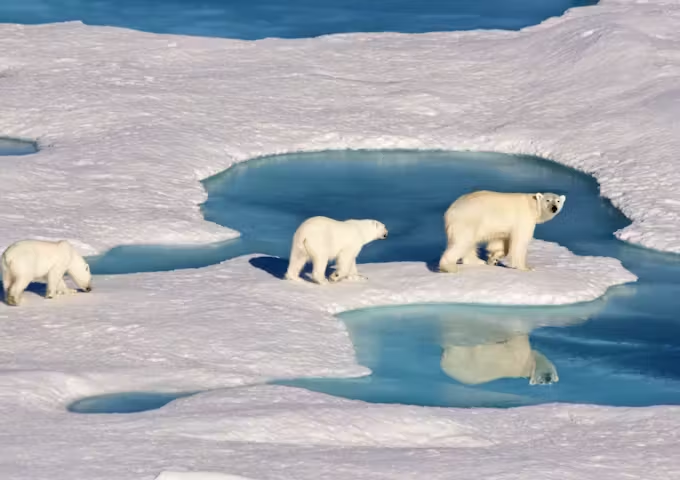
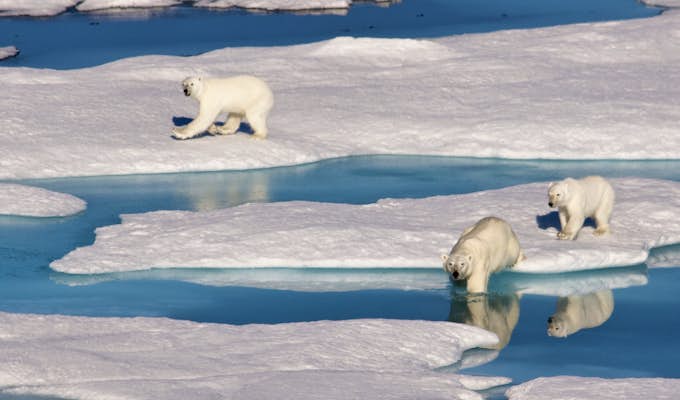
Bears on the sea ice, Lancaster Sound
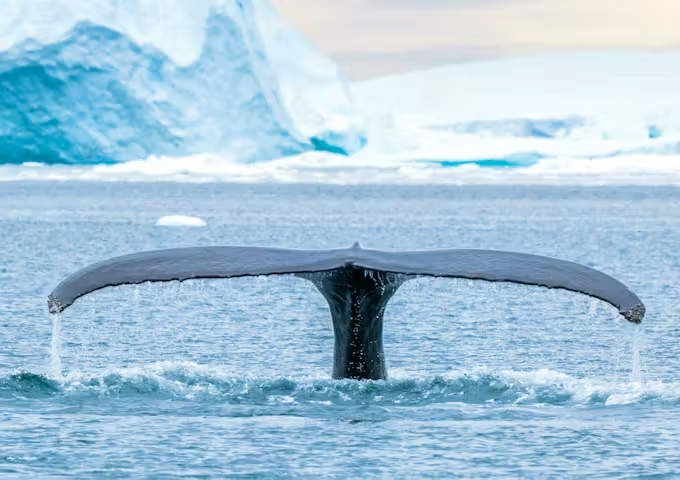
Humpback whale preparing to dive
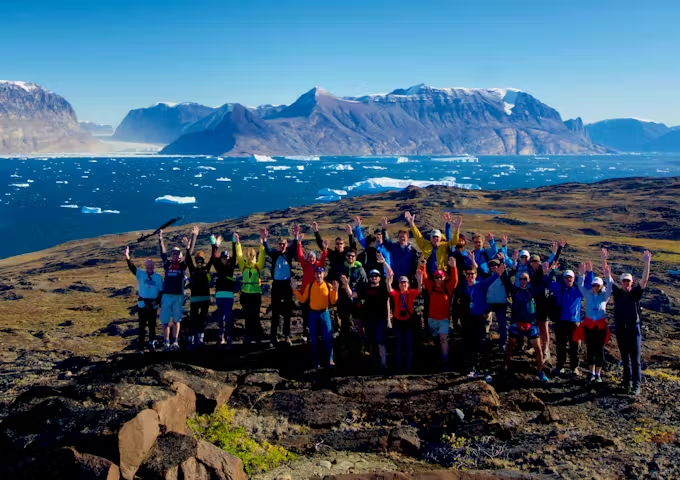
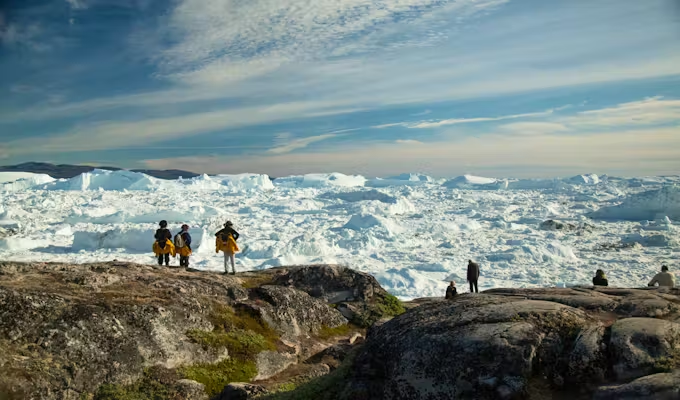
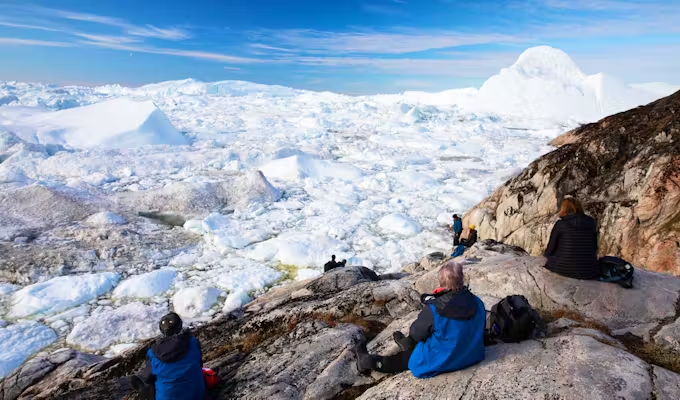
Trekkers near Crocker Bay

A resident of Gjoa Haven
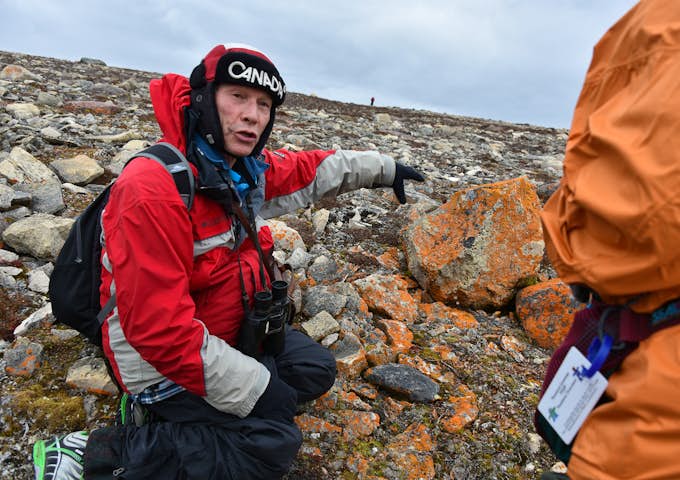
Specialist guides explain archaeological remains
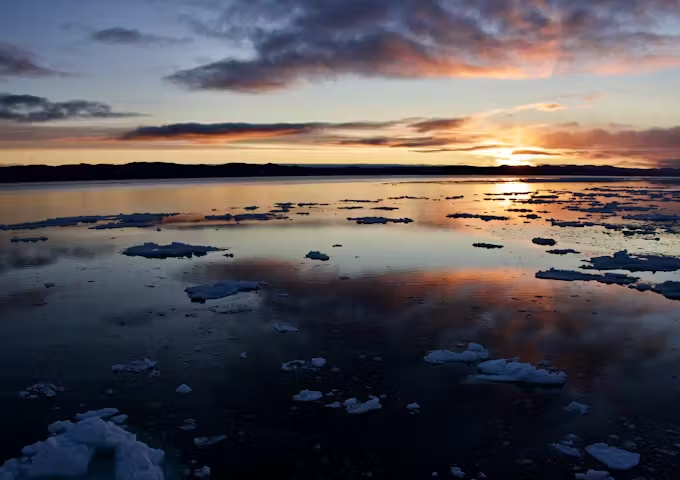
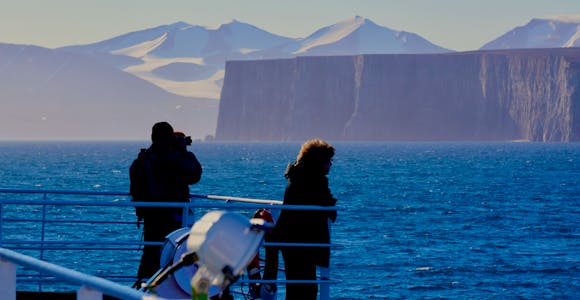
Evening light in the Northwest Passage

Navigating the Bellot Strait

Trekkers on Karrat island

Cruising the Northwest Passage

Bears on the ice at Baffin Island


Greenlandic Inuit community


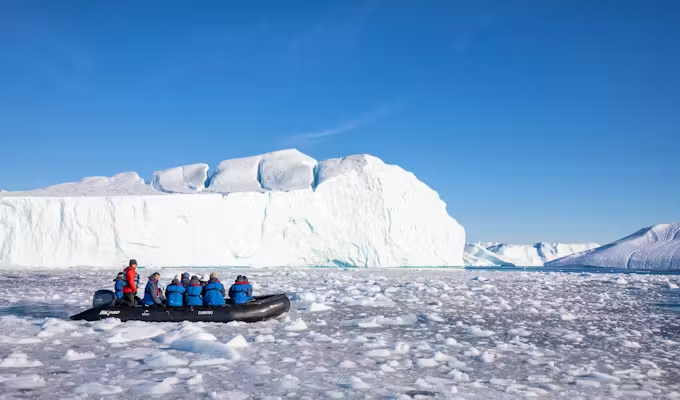
Zodiac cruising among the ice

Graves of explorers on Beechey Island
We'll spend some time listening to your aspirations, then discuss the kind of experience that might suit you.
Next we'll discuss the options, shortlist the best trips for you and present you our impartial recommendations.
We'll place a 24 hour hold on your preferred option - without obligation - whilst we talk through the details.