The Northwest Passage
For the explorer, there are few places evocative as the Northwest Passage. For centuries men sought a way through the ice; even today passage is not guaranteed. This is a true …
Discover More
Whatever images spring to mind when you think of the Northwest Passage, little can prepare you for the majesty of the icescapes, the stories of intrepid explorers, or the enthralling wildlife.
Alex Mudd Head of Swoop Arctic
Special Offers:Swoop has access to the widest range of offers and can help you find the right trip, cabin, & price.
Traversing west to east this voyage takes you to iconic sites such as Cambridge Bay, Lancaster and Smith Sounds and Ellesmere Island, before exploring the fjords and towns of West Greenland. Bears, narwhal, musk ox, beluga and northern lights are…

Set sail on this in-depth, luxury 20-day cruise of west Greenland and the legendary Northwest Passage. Travelling deep into the icy labyrinth of the Northwest Passage, encounter Inuit culture, retrace Franklin’s footsteps and witness Arctic wildlife – musk ox, polar…
The big ice and small towns of West Greenland provide a stunning start to this trip before you sail across the Davis Straight to Baffin Island and enter the Northwest Passage. Blend history, scenery and wildlife; pay your respects at…
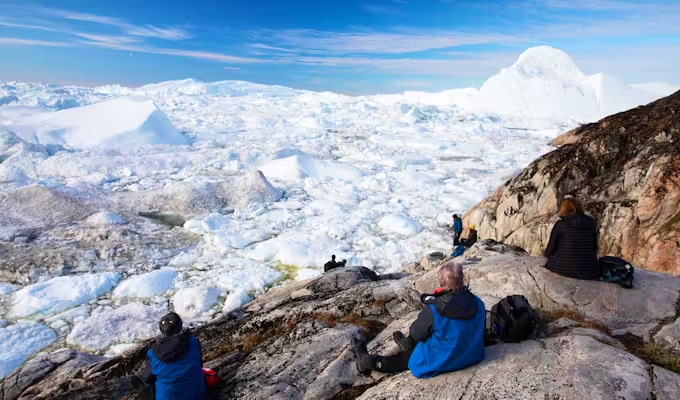
A full transit of the Northwest Passage is a truly epic undertaking, travelling in the footsteps of legendary explorers Amundsen, Franklin and Larsen. This voyage is distinguished by the small, nimble and comfortably appointed expedition ship you'll travel on, with…
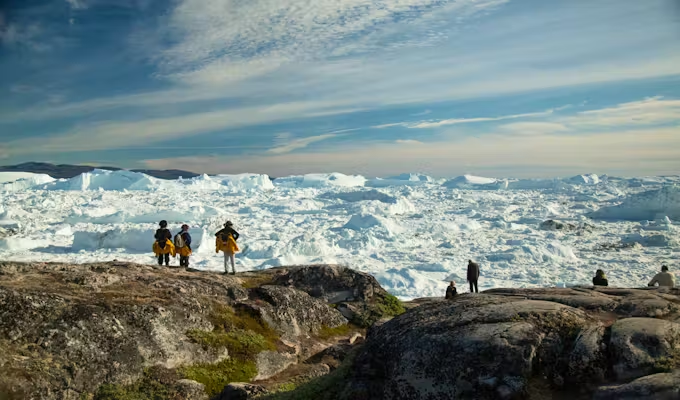
Spending time exploring Canada’s historic Northwest Passage and West Greenland, we like this voyage’s balance and variety as much as exploring little visited spots such as Thule, one of the northernmost towns in the world, and Smith Sound. Big ice,…

This is a fabulous introduction to the best of the Canadian High Arctic, incorporating an in-depth exploration of Baffin Island and the mythical Northwest Passage – with time also in West Greenland. From dramatic glacier-carved scenery and wildlife encounters, to…
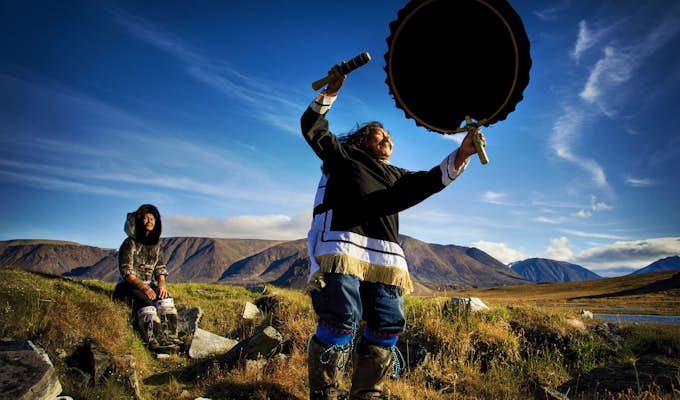
Visits to Canadian and Greenlandic communities Inuit history and culture are at the core of this journey, among those stops both Kinngait, the centre of Inuit Art and Nuuk, Greenland's capital are included. There's plenty of wildlife opportunities too with…
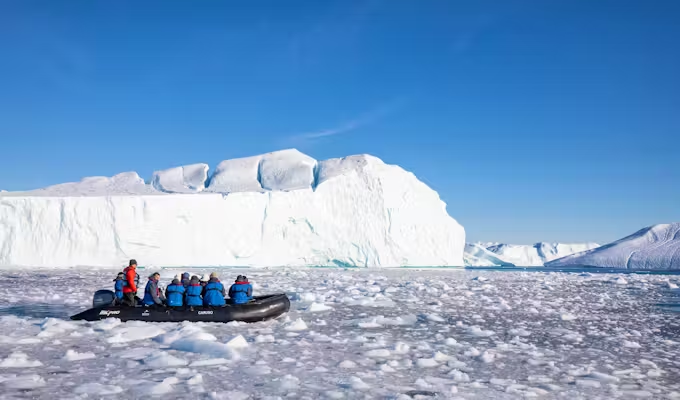
Beginning in Cambridge Bay, this westbound-arching route encapsulates the best that the Northwest Passage and West Greenland have to offer. Thread your way through the icy labyrinth of staggering landscapes, dramatic history, remote Inuit settlements and charismatic Arctic wildlife, with…
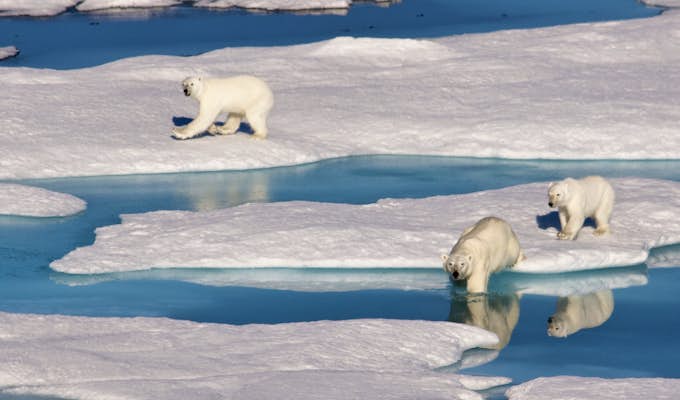
In the labyrinthine icy channels of the legendary Northwest Passage, explore the islands and channels that form Canada’s High Arctic region. Meet local indigenous people, encounter enigmatic Arctic wildlife – including walruses, beluga whales, polar bears, musk oxen and the elusive…

Embark on an epic voyage through the fabled Northwest Passage, sailing from Nome to Nuuk. Alongside your expert Expedition Team, you will encounter spectacular wildlife, UNESCO-listed treasures, and vibrant Inuit settlements. From the thrill of remote exploration to the stunning,…
The history of Franklin’s fateful expedition is a massive draw for many travellers to the Northwest Passage.
Standing sentinel on a windswept beach of Beechey Island are the three graves of John Torrington, John Harnell and William Braine, the earliest casualties in what became the infamous, tragic opera.
Their exhumation played a pivotal role in the unmasking of lead poisoning as a key contributor to the demise of Franklin's party. Standing next to the lonely graves of these lost Englishman, more famous in death than when alive, is certainly sobering.
All Northwest Passage cruises make a stop at this site.

Graves of Franklin's men on Beechey Island
In 1859 the first evidence of what had happened to the Franklin expedition was found in a cairn at Victory Point on King William Island. This broke the news that Sir John himself had died and that the ships were abandoned.
In 2016 HMS Erebus was found in Queen Maud Gulf and HMS Terror in 2018 close to King William Island, with the Academic Vavilov involved in the search.
For anyone with an interest in the Franklin story these are prime sites. Some voyages will land at Victory Point but very few are granted permission to visit the wreck sites.
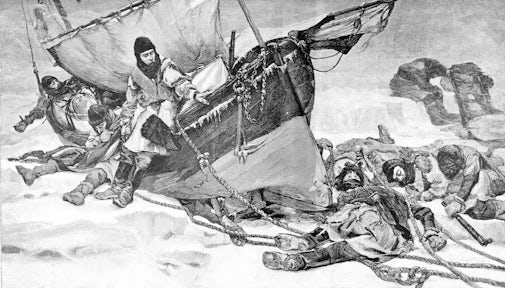
The Franklin expedition at Victory Point
Besides from the Franklin story, the Northwest Passage is a treasure trove of history dating back millennia and includes the Dorset and Thule cultures that transited through this region following the fauna at the ice edge.
The remains of sod houses at sites such as Crocker Bay and the whale bone dwellings of Cornwallis Island tell a story of life lived at the extremes.
It's also an oral culture that is being lost to history as once transient communities move into stationary settlements and face new challenges brought with the change.
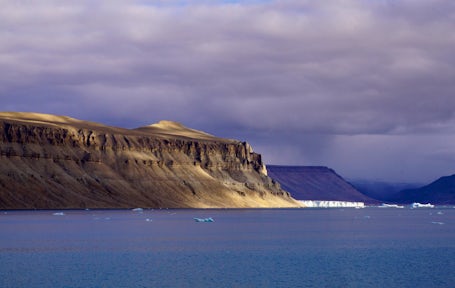
Croker Bay
There is also modern Canadian history in the region; you’ll see evidence of trade with the Hudson Bay Company who established a trading post at Fort Ross, close to the eastern entrance to the Bellot Strait.
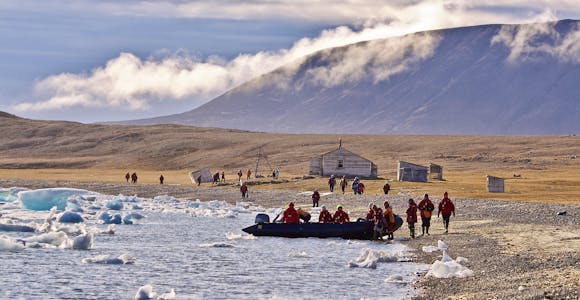
Today the buildings stand abandoned, untouched from the moment the last inhabitant left, with the coffee pot on the stove as if ready to be poured.
The Royal Canadian Mounted Police (RCMP) patrolled the region for years and at Dundas Harbour you will see the deserted dwellings they left behind along with a small cemetery, the resetting place of two of the last men to be posted to these remotest of locations.
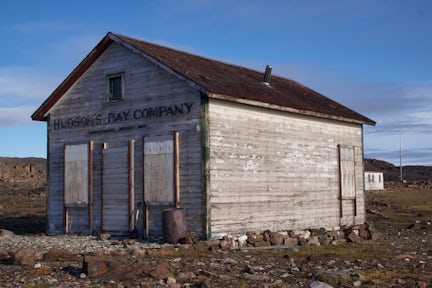
Trading post, Northwest Passage
Scattered through this wild and remote region there are a handful of communities that you may visit along the way. Some, like Pond Inlet, are fairly used to visitors through the summer months and others, such as Kugaaruk, very rarely see a ship at all.
These visits are greatly welcomed by the communities who will often put together a show of traditional dance and music, perhaps with traditional Arctic games as well.
Local artists will also take an opportunity to show and sell their work, it’s one of the few times when you can pick up a memento of your journey.
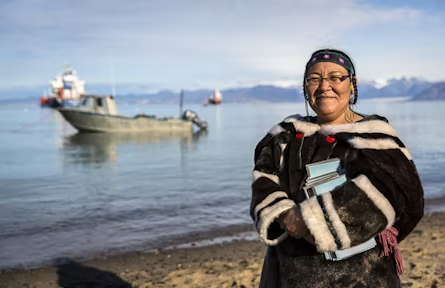
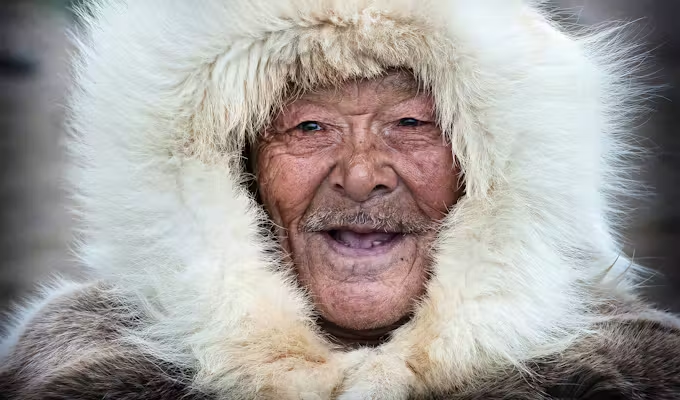
Inuit resident of the Northwest Passage
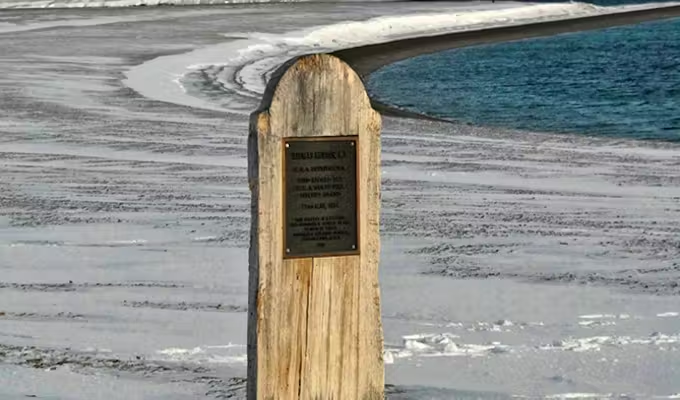
Many of these settlements carry more significance for some travellers. At Gjoa Haven in Prince William Island, a 1,200 strong community, you can visit the monument of Roald Amunsden.
This is where the great man over-wintered for two years from 1903 whilst completing the first successful transit of the passage.
It’s really worth stressing how much the visits mean to these remote populations, not just economically but also for contact with the outside world. Take time to talk to the inhabitants and you'll soon discover how friendly they are.
Don’t be surprised if you find yourself having tea in someone's home! These towns may be small but they are home to fascinating people who have very different stories to tell.

A resident of Gjoa Haven
Wildlife flows through the region with the ice, following its edge as it advances and retreats with the seasons. Lancaster Soundis often described as a wildlife ‘superhighway’.
It's home to 75% of the world’s narwhal population and 20% of Canada’s beluga population, as well as walrus and bowheads. Additionally, 35% of Canadian seabirds breed here.
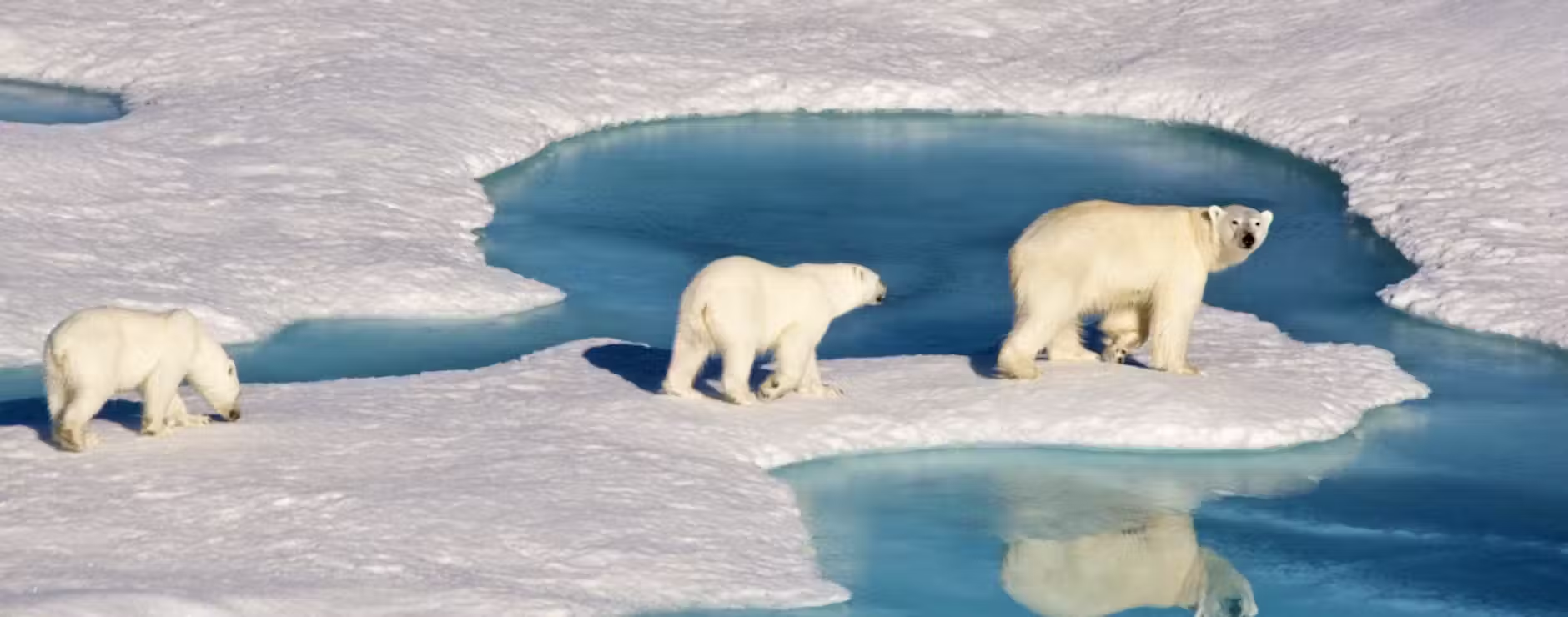
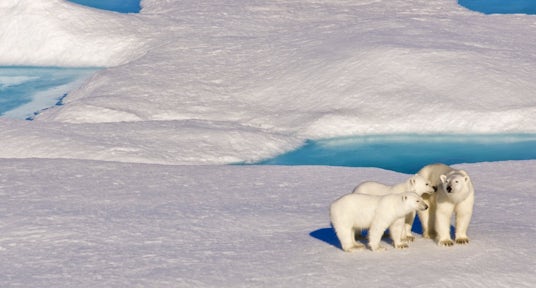
Of course, all these creatures are bait for the polar bear so keep your eyes peeled. Progress has been made to protect the wildlife in recent years, and the 109,000-kilometre-square Tallurutiup Imanga Marin Conservation area has recently been established.
Birders should look out for excursions to sites like Prince Leopold Island, home to hundreds of thousands of thick-billed murres. With steep cliffs often shrouded in mist and surrounded by ice this can be a hugely atmospheric site experienced by zodiac.
Polar bears are always nearby but they frequent some sites more than others. The Bellot Strait is popular: this narrow channel divides Somerset Island from the northernmost point of continental North America, and is known for strong tides which can prove challenging even today.
These currents throw up plankton attracting fish, and as a result it’s a good place for wildlife: seals, polar bears, arctic fox and musk ox.
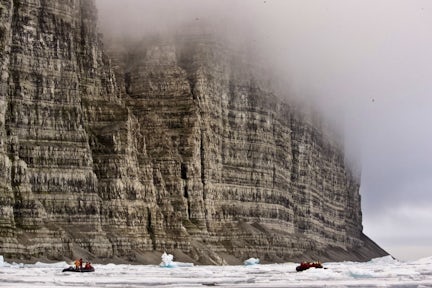
The bird cliffs of Leopold Island
Exploring the vast range of sites in the Northwest Passage not only puts into perspective the achievements of adventurers and explorers who have gone before, but really helps to paint a picture of what it might be like to live at the edge of the world.
Yes, all of these optional activities are offered. If you are interested in specific ones, check carefully as each ship offers a slightly different activity programme.
Hiking, the Polar Plunge and photography workshops are all complimentary. Kayaking quite often carries an extra cost, which we can help advise you on.
Please note that paddle boarding, camping and scuba diving are not available on any ship.
Yes, there are. And these experts - each a specialist in their own particular field - are the backbone of the ship’s team, as they are your accompanying guides, interpreters and presenters.
While each expedition team is different and the individuals rotate around, you can definitely expect there to be a polar historian, glaciologist, local community guide, ornithologist and cetacean specialist on your voyage.
Expedition teams are each led by an Expedition Leader and they are typically between 13 and 30 guides, depending on the size of the ship and number of guests.
Although every effort will be made to follow the original itinerary, the short answer is 'no they're not'. While every trip will depart with a planned itinerary there are many factors that can impact the decision or ability to land at specific sites.
In the Northwest Passage ice is often the biggest factor and can, at times, cause an entire trip to be re-routed. Polar bears are another threat to landings – sighting one of these predators in the vicinity of a landing site will mean that no one is going ashore.
The decision to land or not is in the hands of the captain and the expedition leader, the former being in responsible for the ship and the latter for your safety. Wherever possible, if a landing site is missed, it will be replaced by an equivalent.
With the sadly increasing summer temperatures in the Arctic and resultant melting of the ice, successfully transiting the Northwest Passage is now all but guaranteed, in a way that it wasn’t 20 years ago.
This is a key question, and in the Northwest Passage there are several ways to think about it:
Firstly, you should consider what's most important to you, as there are trade-offs. A smaller ship typically lends itself to a more intimate experience, where you’ll get to know a greater proportion of your fellow passengers, and getting on and off the ship will be speedier.
However, the anonymity of a larger ship, alongside normally more on-ship amenities and a wider choice of dining locations (particularly on a longer voyage) can be attractive. There’s no right or wrong answer, it's simply down to personal choice.
The other way to look at it – given the relatively limited number of Northwest Passage itineraries and ships – is to focus on choosing the right trip first, as depending on which you choose, there may only be one or two ships from which to choose.
This is a tricky question to answer as there’s always a slice of luck involved when it comes to wildlife sightings. However, in our experience, smaller ships have a higher chance of better wildlife sightings because:
When it comes to landings, this is where having fewer guests on board carries a distinct advantage as it means:
For the explorer, there are few places evocative as the Northwest Passage. For centuries men sought a way through the ice; even today passage is not guaranteed. This is a true …
Discover More
This labyrinthine waterway was long sought by early adventurers as a sea route linking the Northern Atlantic and Pacific Oceans. Canada's Arctic archipelago is therefore no …
Discover More
The Northwest Passage, that beautiful and sparsely populated labyrinth of islands stretching from the Atlantic to the Pacific Ocean, is defined by its vast distances, remoteness …
Discover More
There’s very good reason why the Northwest Passage is only open to visitors in August and September: it's the only time average temperatures are above freezing, and the ice has …
Discover MoreMaking the correct choice of ship is key. With firsthand experience of all of the ships we offer, let Swoop help guide you to exactly the right one.
We'll spend some time listening to your aspirations, then discuss the kind of experience that might suit you.
Next we'll discuss the options, shortlist the best trips for you and present you our impartial recommendations.
We'll place a 24 hour hold on your preferred option - without obligation - whilst we talk through the details.