
Svalbard Cruises
Halfway between Norway and the North Pole, Svalbard distils the best of the Arctic into one remarkable archipelago. In high summer, largely ice-free coastlines reveal calving …
Discover More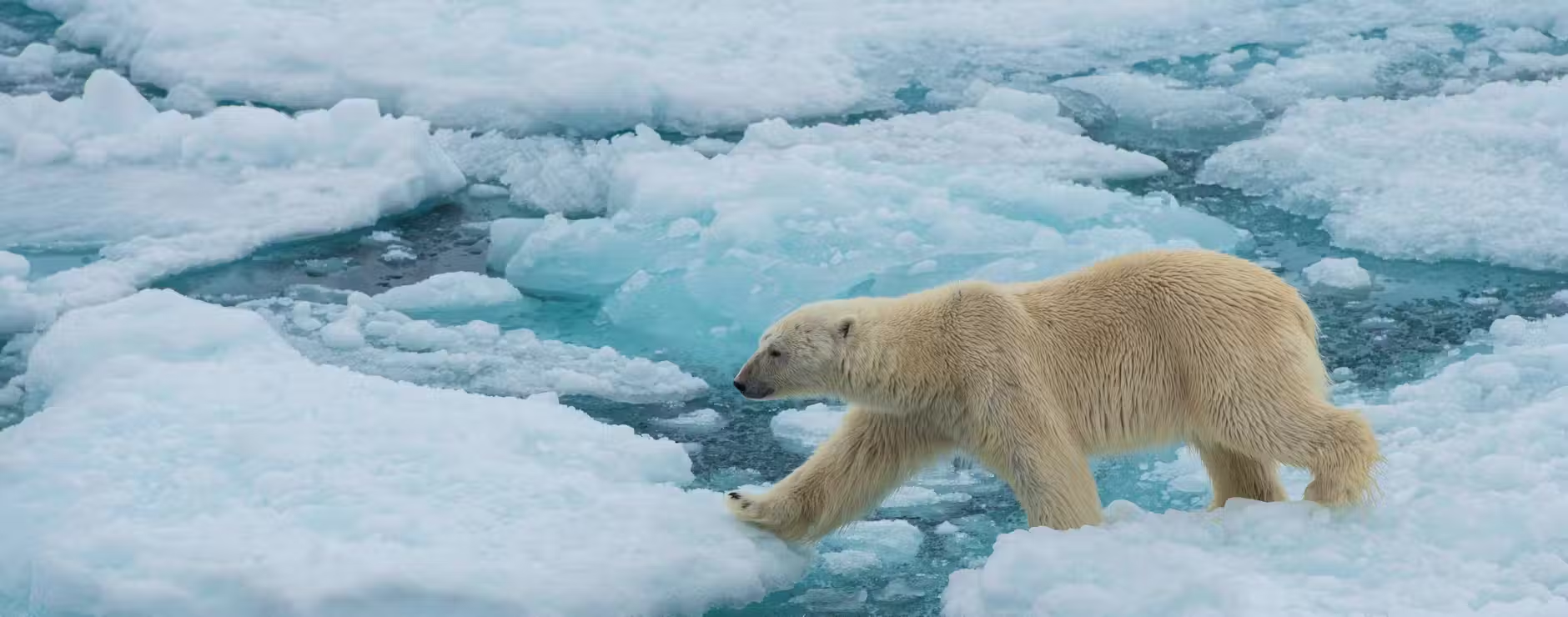
For sheer excitement your first polar bear sighting is hard to beat. I had dreamed of that moment for a very long time and it certainly didn’t disappoint.
Karl ONeill Arctic Sales Specialist

Special Offers:Swoop has access to the widest range of offers and can help you find the right trip, cabin, & price.

An intimate summer expedition circumnavigating Spitsbergen on a 12-guest micro ship. Feel connection to nature, with a sense of solitude and scale, which is harder to find on larger ships. Explore rarely-visited islands, glaciers and the polar desert in search…
Travelling in luxury aboard an outstanding expedition ship, we love this trip for its unusual combination of Svalbard and Norway’s northern tip, plus its focus on top-notch service and cuisine. After a hassle-free flight from Oslo to Svalbard, spend seven…

Maximise wildlife sightings with the chance to circumnavigate Spitsbergen island. Search for walrus, arctic fox, whales and of course the ‘King of The Arctic'. Sail through the Hinlopen Strait and visit abandoned trapping stations and experience glaciers up close all…

Travelling at the height of summer, this trip is the longest of any Svalbard cruise and offers the best possible conditions for thrilling wildlife encounters. Your circumnavigation of Spitsbergen includes huge glaciers, epic bird cliffs and ice-choked channels. Plus, there's…

Experience the Arctic’s legendary wildlife aboard an intimate micro expedition ship, amidst a pristine backdrop of calving glaciers, and snow-capped mountains. With an unmatched sense of ‘expedition’ and a deeper connection to nature, you build your own adventure, searching for…
Let the midnight sun guide the way as you sail north to Phippsøya, just 540 miles from the geographical North Pole. En route you'll experience calving glaciers and teeming colonies of seabirds, walrus and whales, all while keeping a sharp…

This popular introduction to Svalbard is keenly priced and, with numerous early season departures, guarantees plenty of ice. Sail onboard one of the newest ships in polar waters and spot bears from the plentiful deck space. Optional kayaking and hiking…

Truly escape the modern world and explore Svalbard on board a schooner. Sail north through the melting spring ice, spot wildlife and learn about the archipelago’s rich history. Highlights include the Monaco Glacier, 17th century whaling settlements, close encounters with…

Circumnavigate Spitsbergen on board on a comfortable expedition ship and in the company of specialist guides. Travelling on a smaller ship allows you more time to explore, and some late-season departures benefit from stunning autumn light. Ask about special guest…
Scouting Svalbard’s ice floes for wildlife by zodiac and on foot, cruising the magnificent 14th of July glacier and reaching the world’s most northerly settlement at Ny Ålesund are just some of this 10-day voyage’s many highlights. There's also the…
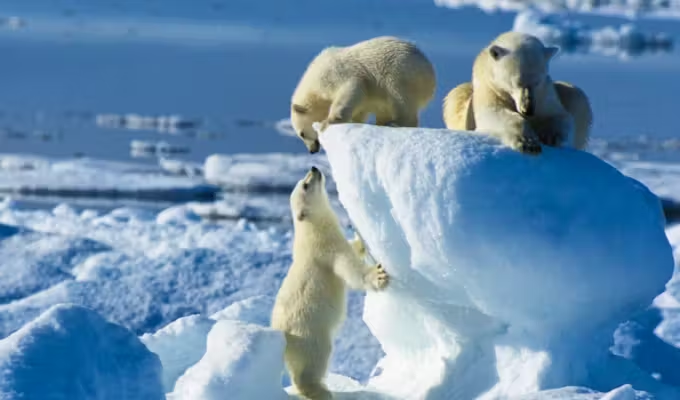
In a 2004 survey it was found that the polar bear population of Svalbard and Franz Josef Land numbered around 3,000 animals. Given that this means there’s more bears than humans on Svalbard, the chance of a successful sighting of the King of the Arctic is good. Once heavily hunted, polar bears on Svalbard have been protected by law since 1973 and numbers remain healthy.
Polar bears are seen throughout the archipelago, however in summer they’re more commonly sighted in the north and northwestern parts of Svalbard, and on the east coast where ice remains heaviest. A supreme apex predator, bear viewing from the safety of a ship or zodiac is the safest platform from which to observe these powerful animals.
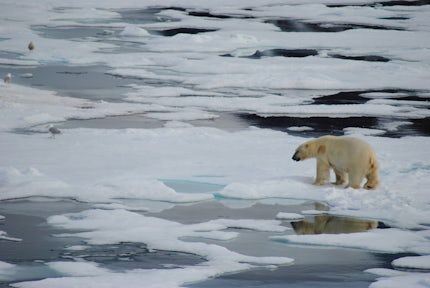
A bear explores Svalbard's sea ice
One of the few creatures to remain in the Svalbard area overwinter, the walrus is another iconic and instantly recognisable Arctic animal, courtesy of its impressively long and curved tusks. Svalbard’s walrus population is thriving with estimates of 3,900 animals in a 2012 survey - up from 2,500 in 2006.
Social by nature, walrus are often to be seen aggregated in groups resting on an ice-floe or on land in what’s commonly referred to as a ‘haul-out’. Walrus have a voracious appetite with molluscs being their main staple, which are swallowed whole. They can dive down to a depth of 260 ft/ 80m and stay underwater for up to half an hour. What they may lack in vision, particularly in murky water, they make up with their highly tuned whiskers.
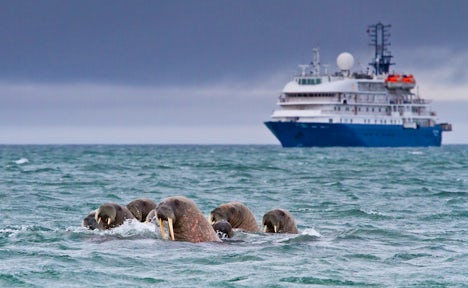
Walrus in open water
It's far from uncommon to find reindeer wandering through Longyearbyen and as such you are almost guaranteed to see one, even close up.
Technically a sub-species of reindeer, Svalbard reindeer are found throughout the archipelago wherever there’s sufficient vegetation for them and have no natural predators.
The population of Svalbard reindeer is estimated at 20,000 with the largest concentrations to be found on Nordensjöld Land, Edgeøya and Barentsøya.
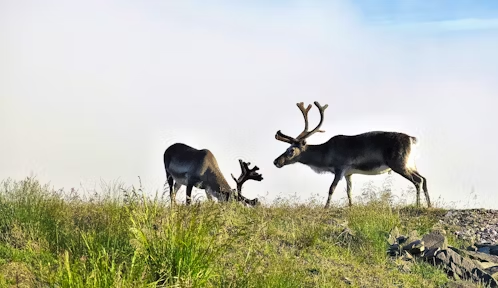
Reindeer grazing on the tundra
The favourite food of polar bears, ringed seal are the most widespread and common seal at this latitude and play a very important role in the Arctic food chain. Svalbard’s population is estimated to be around 100,000.
It’s the ringed pattern in this seals fur which gave it its name. In spite of their small size they’re capable of diving to +1,600 ft/ 500m.
Due to the ringed seals absolute dependence on ice, particularly for their berthing lairs, there is serious concern for them in the face of warming temperatures across the Arctic, and climate change.
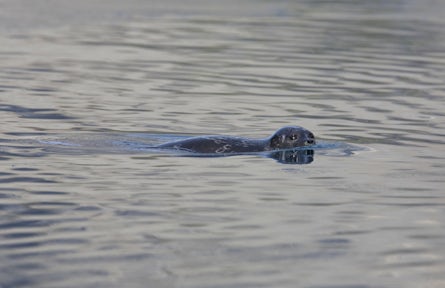
Ringed seal cruising through open water
Svalbard has a large and thriving population of these charismatic opportunistic scavengers, which means there are good chances of sightings, particularly around bird cliffs where food is plentiful for them during summer. This is also where their denning sites are commonly found.
The Arctic fox is ideally adapted for these high latitudes – being one of the few to remain over winter – with its thick, well insulated coat, fur covered paws and small rounded ears. This animal is unusual in that it appears in two different guises: blue and white. The white is characterised by a brown/yellowish coat during summer and white all over in winter. To blend in. The blue fox by contrast is a dark brown/ blue colour throughout the whole year.
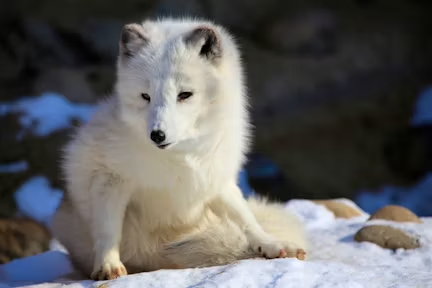
Arctic fox
Svalbard is a magnet for birds every summer when literally hundreds of different species fly north to nest on every cliff and ledge in the archipelago, making it a paradise for birders.
The Arctic Tern migrates 70,000 km, from the Antarctic to the Arctic and back again, every year.
The Svalbard rock ptarmigan is the only land-bound bird species that overwinters in the archipelago. Among the seabirds it's only the common eider, the long-tailed duck and the black guillemot that overwinter in Svalbard.
The lack of trees and bushes in Svalbard means birds nest here on the ground, on scree slopes or cliff ledges.
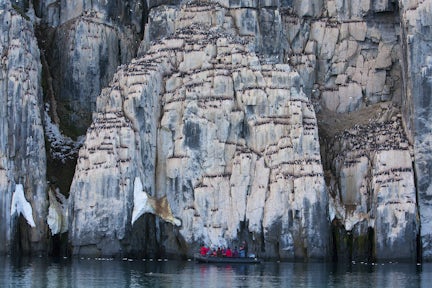
Birds nesting on the cliffs at Alkefjellet
While no accurate figures on the size of Svalbard’s beluga whale population exists, they are in good numbers and are quite commonly sighted by expedition ships and kayakers between May and September.
These medium sized toothed whales – also referred to as ‘white whales’ – are social and gregarious, and typically spotted in groups around coastal areas and active ice edges, especially around Spitsbergen and Isfjorden.
As with polar bears, it's common to find them near to glaciers where there’s a plentiful food supply.
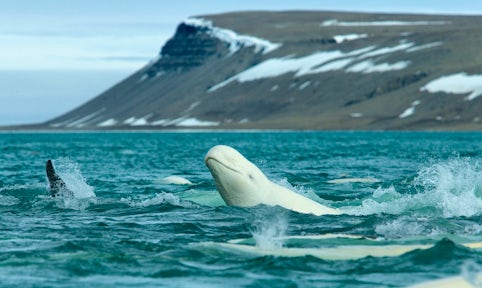
Belugas in the Arctic
Three species of terrestrial mammals are found on Svalbard, and 19 species of marine mammal, including polar bears and walrus.
Halfway between Norway and the North Pole, Svalbard distils the best of the Arctic into one remarkable archipelago. In high summer, largely ice-free coastlines reveal calving …
Discover More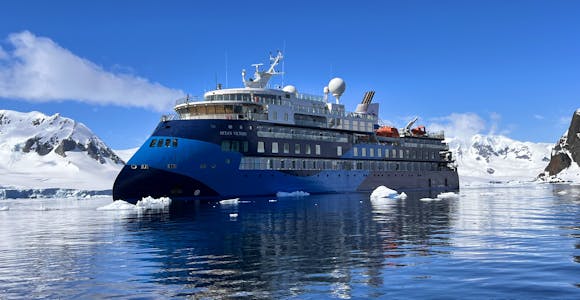
In the absence of hotels, exploring Svalbard by ship provides unparalleled access to the archipelago's remote coastlines and icy fjords. Due to its popularity, Svalbard offers the …
Discover More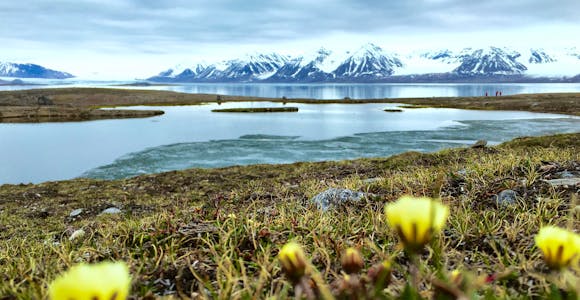
While Svalbard may be an almost year round destination, the changing weather, number of daylight hours, amount of ice and snow conditions through the year all have a marked effect …
Discover More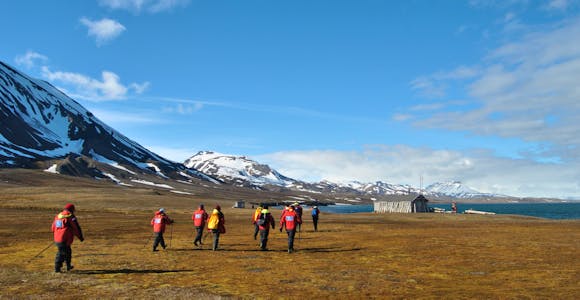
In spite of Svalbard being geographically closer to the North Pole than to Norway, it's surprisingly straightforward to get there. There are regular daily scheduled flights between…
Discover MoreSvalbard is one of the best places in the whole Arctic to see polar bears, so your chances are good. The bear population in and around Svalbard is healthy and numerous. As ever with wildlife, there are no guarantees of sightings.
To give yourself the best possible chance of seeing a polar bear, we typically advise choosing:
As an apex predator, polar bears need to be taken seriously when travelling in Svalbard, but with safety being a primary consideration on every Svalbard cruise, and strict adherence to protocols, they don’t pose a danger to cruise passengers.
In January 2025, Svalbard introduced a minimum distance of 500 metres (1,640 feet) to polar bears, reducing to 300 metres on July 1st each year, and this law is strictly enforced. So it's only in very exceptional circumstances that polar bears pose any threat. Plus, the elevation and dynamic of an expedition ship means they’re a very safe environment in which to explore polar bear country.
On a landing excursion, before any guests go ashore, the expedition team will undertake a careful scout of the surrounding area for any bears. During the landing excursion, ‘bear guards’ will also be posted at high points to keep a close eye. As a precaution, members of the expedition team accompanying passengers on land will carry a rifle, as well as ‘bear bangers’ which are used in the first instance as a deterrent.
Yes, we think so. In our experience, smaller ships have a higher chance of better wildlife sightings because:
When it comes to landings, this is where having fewer guests on board carries a distinct advantage as it means:
Yes, very much so. Ice and weather conditions are THE most significant two influences on the ultimate route your voyage will take. Your Expedition Leader and Captain will be in constant communication, assessing the shifting conditions.
Typically not. Due to the dynamic variables of ice and weather in particular, a key feature of any Svalbard expedition cruise is the need to adapt to the ever changing local conditions, so ships are careful not to overcommit to particular destinations.
The good news in Svalbard is that there are so many different places, and distances aren’t vast, so if conditions change, there are always multiple alternative options close by (which may prove to be even better than Plan A).
Yes, we’re big fans of a Svalbard circumnavigation as they are longer trips, which naturally optimises your chances for wildlife encounters, the eastern side of Spitsbergen is different to the west so you get to experience that variety; plus, there’s a lovely symmetry to a circumnavigation.
Yes, all of the above are onboard and are part of the Expedition Team. And these experts – each a specialist in their own particular field – are the backbone of the ship’s team, as they are your accompanying guides, interpreters and presenters.
While each expedition team is different, and the individuals rotate around, you can definitely expect there to be a polar historian, glaciologist, local community guide, ornithologist and cetacean specialist on your voyage.
Expedition teams are each led by an Expedition Leader and there are typically between 13 and 30 guides in an expedition team, depending on the size of the ship and number of guests.
Yes they are. Shore excursions, or ‘landings’ as they’re typically called, are the backbone of your Svalbard cruise and you can expect to go ashore at least once a day for 1–2 hours to visit a place of historic interest, enjoy a hike, gain elevation to appreciate the awesome landscape and also to look out for wildlife opportunities (typically reindeer, walrus and Arctic fox).
Yes, zodiacs – the inflatable rubber boats which carry approx 10-12 guests – play a critical role in every Svalbard cruise, by ‘uber-ing’ guests between the ship and shore, and doing ‘zodiac cruises’ where you explore the surrounding area with your driver-guide, looking for photo opportunities and wildlife sightings.
We'll spend some time listening to your aspirations, then discuss the kind of experience that might suit you.
Next we'll discuss the options, shortlist the best trips for you and present you our impartial recommendations.
We'll place a 24 hour hold on your preferred option - without obligation - whilst we talk through the details.