
Getting to Svalbard
In spite of Svalbard being geographically closer to the North Pole than to Norway, it's surprisingly straightforward to get there. There are regular daily scheduled flights between…
Discover More
There’s really no best time to visit Svalbard because each season reveals a completely different world. Spring offers snowcap vistas and brilliant sea ice, summer opens up remote northern fjords for prime wildlife encounters, and the late summer brings dramatic polar light.
Karl ONeill Arctic Sales Specialist
Special Offers:Swoop has access to the widest range of offers and can help you find the right trip, cabin, & price.

Maximise wildlife sightings with the chance to circumnavigate Spitsbergen island. Search for walrus, arctic fox, whales and of course the ‘King of The Arctic'. Sail through the Hinlopen Strait and visit abandoned trapping stations and experience glaciers up close all…

Experience the Arctic’s legendary wildlife aboard an intimate micro expedition ship, amidst a pristine backdrop of calving glaciers, and snow-capped mountains. With an unmatched sense of ‘expedition’ and a deeper connection to nature, you build your own adventure, searching for…
Introductions to the High Arctic don’t come much better. Traverse wildlife-rich Svalbard via East Greenland’s towering icebergs and autumnal tundra, then continue on to Iceland. Aurora sightings are possible at any point.…
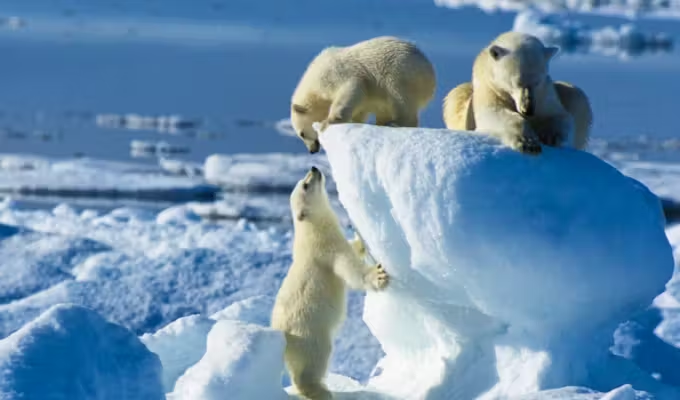
Scouting Svalbard’s ice floes for wildlife by zodiac and on foot, cruising the magnificent 14th of July glacier and reaching the world’s most northerly settlement at Ny Ålesund are just some of this 10-day voyage’s many highlights. There's also the…

An intimate summer expedition circumnavigating Spitsbergen on a 12-guest micro ship. Feel connection to nature, with a sense of solitude and scale, which is harder to find on larger ships. Explore rarely-visited islands, glaciers and the polar desert in search…

Travelling at the height of summer, this trip is the longest of any Svalbard cruise and offers the best possible conditions for thrilling wildlife encounters. Your circumnavigation of Spitsbergen includes huge glaciers, epic bird cliffs and ice-choked channels. Plus, there's…

Truly escape the modern world and explore Svalbard on board a schooner. Sail north through the melting spring ice, spot wildlife and learn about the archipelago’s rich history. Highlights include the Monaco Glacier, 17th century whaling settlements, close encounters with…

This popular introduction to Svalbard is keenly priced and, with numerous early season departures, guarantees plenty of ice. Sail onboard one of the newest ships in polar waters and spot bears from the plentiful deck space. Optional kayaking and hiking…

Circumnavigate Spitsbergen on board on a comfortable expedition ship and in the company of specialist guides. Travelling on a smaller ship allows you more time to explore, and some late-season departures benefit from stunning autumn light. Ask about special guest…

Spring travel in Svalbard is a real treat, particularly on board a 12-guest micro ship. Revel in being one of the earliest visitors with the whole archipelago largely to yourselves. Explore iced fjords, a landscape still shrouded in snow, and…
Travelling in luxury aboard an outstanding expedition ship, we love this trip for its unusual combination of Svalbard and Norway’s northern tip, plus its focus on top-notch service and cuisine. After a hassle-free flight from Oslo to Svalbard, spend seven…

For guests seeking a seamless, luxury, all-inclusive Svalbard travel experience, this is the ideal option. Travelling aboard an outstanding expedition ship with a choice of dining options and very well appointed suites, spend six full days exploring Svalbard’s spectacular coastline…

Explore the fjords and ice of Svalbard keeping a close watch for polar bears onboard an exceptional expedition ship. Spend time on deck, on land and in zodiacs with the hugely experienced guides learning about the history, geology and wildlife…
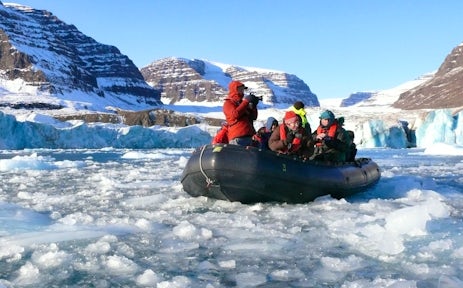
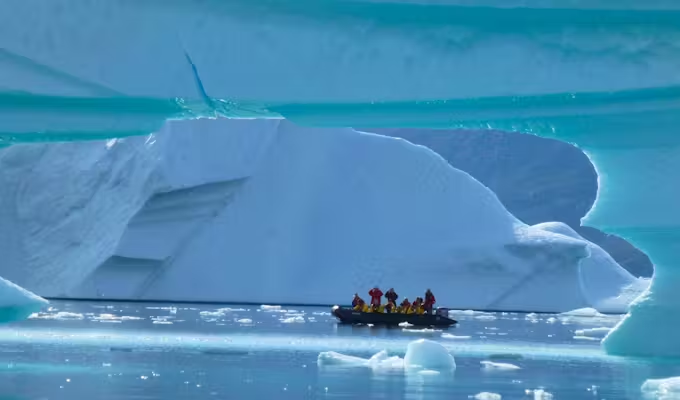
Taking a zodiac through the ice
May is an incredible time to experience Svalbard. Under the continuous glow of the midnight sun – which begins in late April – the frozen wilderness shines in endless golden light, with daytime temperatures hovering around –4°C (25°F).
By May, the coastal ice is breaking up allowing safe passage for the first ships of the season and the archipelago’s summer wildlife visitors – walrus, whales and breeding birds in their millions.
For lovers of dramatic sea ice and crisp winter scenery, spring offers an unforgettable Arctic showcase.
Summer in Svalbard is prime time for a cruise. New areas become accessible again as the ice melts, and walking the snow-free tundra is a real highlight. July is the warmest month, with average temperatures of 3 to 7°C (37.4 to 44.6°F).
The Midnight Sun’s constant daylight helps maximise wildlife sightings. Every cliff is packed with a frenzy of bird activity, whales return to the ice-free fjords, walrus collect in ‘haul-outs’ and opportunistic polar bears and arctic fox are on the prowl.
By mid-July, ice-choked Hinlopen Strait between the islands of Spitsbergen and Nordaustlandet normally becomes navigable allowing circumnavigations of Spitsbergen.

Hiking in Svalbard
Late summer in Svalbard, starting in August, features golden daylight and vivid tundra hues. It's an ideal window to spot coastal polar bears, trek snow-free paths dotted with wildflowers, and capture warm-lit ice. By early September, bright autumn colours blanket the terrain as peak-season crowds diminish into quiet.
Air temperatures cool slightly while staying relatively mild, averaging around 6°C (42.8°F) in August. With fjords generally clear of sea ice, ships enjoy excellent access to the archipelago's most remote coastal waterways.
As August wanes into September, continuous daylight comes to an end. The sun briefly sets, bringing longer twilights that paint glaciers and peaks in soft, golden tones. By the middle of September all expedition ships have left the archipelago.

Coastal landscape of Svalbard

Late May to August is the prime time to explore Svalbard on board an ice-strengthened ship. The receding ice allows access for a few limited months each summer, which also coincide with peak wildlife activity.
In spite of Svalbard being geographically closer to the North Pole than to Norway, it's surprisingly straightforward to get there. There are regular daily scheduled flights between…
Discover More
Deep inside the Arctic Circle and only 500 miles from the North Pole, the archipelago of Svalbard exists at the edge of the inhabitable world. An icy realm on the roof of the world…
Discover More
Halfway between Norway and the North Pole, Svalbard distils the best of the Arctic into one remarkable archipelago. In high summer, largely ice-free coastlines reveal calving …
Discover More
At the height of summer when wildlife populations and activity are peaking on Svalbard, there are few other parts of the Arctic which offer the same combination of easy access and …
Discover MoreEarly season when Svalbard is still experiencing spring: April and May are the months to visit, when the landscape is still cloaked in snow, and the fjords are still largely frozen in by ice.
It's a magical time to visit – there’s a pristineness to Svalbard, and with very few ships yet in the area at this time, you feel like an early pioneer and have the whole archipelago almost to yourselves.
Wildlife activity reaches its peak on Svalbard during high summer: June, July and August.
This makes these months the best time for wildlife enthusiasts to travel.
The term Midnight Sun is used to describe the phenomenon of 24-hour daylight, experienced on Svalbard from 15th April to 26th August each year.
You do not need a visa for Svalbard itself, but as you will be travelling through Norway, non-EU nationals should check the visa requirements for their country.
We strongly recommend booking at least 10-20 months in advance, to ensure you’re able to secure your first choice and a well located cabin. Why risk having to compromise on such an important trip, so book well ahead.
Plus, most ships reward early bookers with a generous early booking discount, which is always appreciated, and may mean that cabin upgrade is more achievable than you had thought.
From time-to-time, some ships may offer limited, last minute discounts on sub-optimal departure dates or itineraries, but the choice will be limited, and you’ll need to be flexible with your travel dates. Plus, by this stage, flight prices will be high, if they are even still available as with so free flights they do get booked out.
The smarter and less risky tactic is to book as early as possible, when you’ll be able to secure the highest early booking discount.
Yes you can, even if you have charter flights included in your Svalbard cruise package.
While you’ll typically have a few hours available to explore Longyearbyen, either immediately before or on the morning you disembark, this will only allow you to explore the town itself, church and museums, and won’t give you enough time to take part in some of the more exciting summer excursions on offer, which include:
We'll spend some time listening to your aspirations, then discuss the kind of experience that might suit you.
Next we'll discuss the options, shortlist the best trips for you and present you our impartial recommendations.
We'll place a 24 hour hold on your preferred option - without obligation - whilst we talk through the details.