



Canadian Arctic Cruises
Sandwiched between Alaska and Greenland, Canada’s ‘Far North’ covers a whopping 39% of the country’s total land area, yet is populated by less than 1% of the population. …
Discover More
The Canadian Arctic is a breathtaking, sparsely inhabited island labyrinth. Distances are vast and transport is minimal, so realistically an expedition cruise in the only way to travel in this region.
Nardus Erasmus Arctic Sales Specialist


Special Offers:Swoop has access to the widest range of offers and can help you find the right trip, cabin, & price.

We love this voyage for its breathtaking variety – landscape, wildlife, habitat and culture – as you journey south from the icy home of the Inuit, through the boreal forest belt, to finish in Newfoundland, with its Viking and Celtic…

Embark on one of the world’s most iconic journeys – a full transit through the fabled Northwest Passage from Alaska to Greenland, following in the footsteps of the intrepid early explorers. What makes this particular voyage even more special is…

Combining little-visited southeast Baffin Island with the towering icebergs and charming communities of West Greenland, this is an unusual and fascinating exploration of two very different Arctic regions divided by Baffin Bay. Sailing on an all-inclusive luxury polar ship, with…
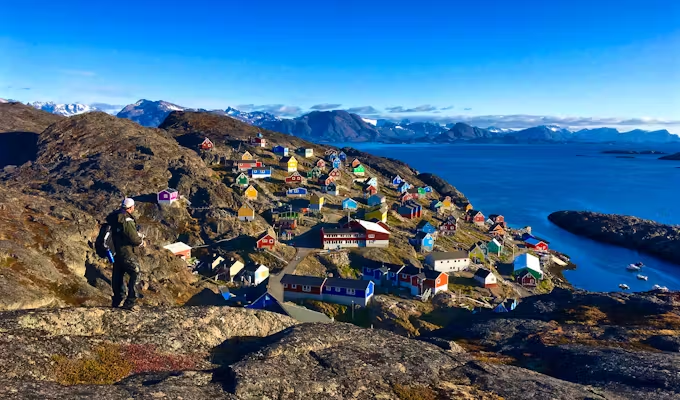
In two weeks and over 2,200 nautical miles, sail from Newfoundland, along Canada’s dramatic Labrador coast, to West Greenland. Prepare to be wowed by the variety with everything from Inuit culture to caribou, UNESCO World Heritage sites to polar bears,…

Embark on an epic voyage through the fabled Northwest Passage, sailing from Nome to Nuuk. Alongside your expert Expedition Team, you will encounter spectacular wildlife, UNESCO-listed treasures, and vibrant Inuit settlements. From the thrill of remote exploration to the stunning,…
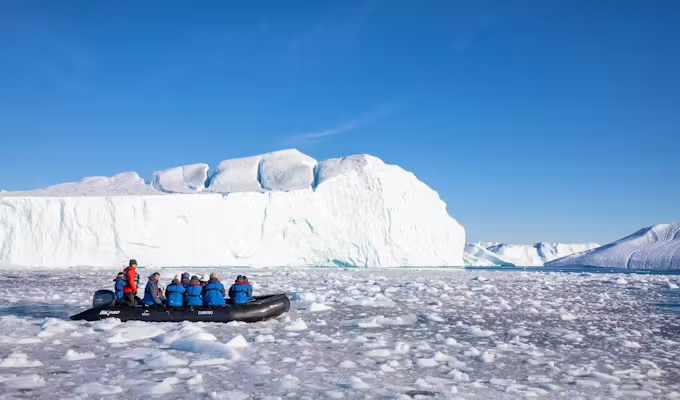
Beginning in Cambridge Bay, this westbound-arching route encapsulates the best that the Northwest Passage and West Greenland have to offer. Thread your way through the icy labyrinth of staggering landscapes, dramatic history, remote Inuit settlements and charismatic Arctic wildlife, with…
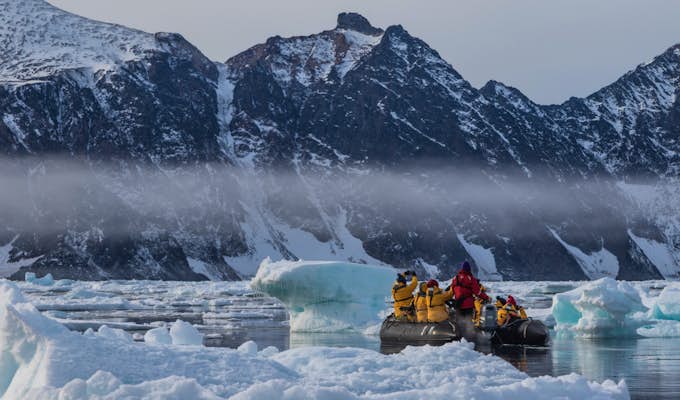
This comprehensive westbound voyage stands out for its compelling combination of West Greenland, the east coast of Baffin Island and the historic Northwest Passage. Jaw-dropping scenery, towering icebergs, thrilling wildlife encounters, Inuit community visits and fascinating history pervade this epic…

Set sail on this in-depth, luxury 20-day cruise of west Greenland and the legendary Northwest Passage. Travelling deep into the icy labyrinth of the Northwest Passage, encounter Inuit culture, retrace Franklin’s footsteps and witness Arctic wildlife – musk ox, polar…

Follow in the footsteps of legendary explorers on a magnificent voyage from Greenland, attempting to transit the fabled Northwest Passage toward Alaska. Alongside your expert Expedition Team, you will discover UNESCO-listed sites, abundant wildlife, and vibrant Inuit settlements. This journey…
In the labyrinthine icy channels of the legendary Northwest Passage, explore the islands and channels that form Canada’s High Arctic region. Meet local indigenous people, encounter enigmatic Arctic wildlife – including walruses, beluga whales, polar bears, musk oxen and the elusive…
Traversing west to east this voyage takes you to iconic sites such as Cambridge Bay, Lancaster and Smith Sounds and Ellesmere Island, before exploring the fjords and towns of West Greenland. Bears, narwhal, musk ox, beluga and northern lights are…
The big ice and small towns of West Greenland provide a stunning start to this trip before you sail across the Davis Straight to Baffin Island and enter the Northwest Passage. Blend history, scenery and wildlife; pay your respects at…

True adventurers wanted! Spend 11 whole days exploring the remote, virtually unvisited borderlands where Greenland and the Canadian Arctic meet. No other expedition ship travels this far north. Flying from Ottawa to Resolute, you’ll sail historic waterways, explore glacier-carved islands…

For an extraordinary Arctic introduction, join this unique full circumnavigation of Baffin Bay’s icy waters aboard a comfortable, state-of-the-art expedition ship. Travelling clockwise, you will navigate deep fjords, witness towering icebergs and explore remote sites. Venturing further north than almost…
Humans first entered this region some 12,000 years ago, following big game across a land bridge that is now the Bering Strait. The first archaeological remains of a Paleoeskimo culture date to 5,000 years ago, followed by the Dorset culture 2,500 years later who developed marine hunting techniques.
Between 1,200 and 500 years ago the Thule began building whalebone and sod houses, the remains of which you can still see.
The Thule period also saw the first impact of an alien culture on the region. As Vikings expanded their territory, artefacts suggest trade links were established with the Norsemen who settled in Greenland.
More recently the Northwest Passage became infamous as explorers tried and failed for centuries to find a way through the ice.

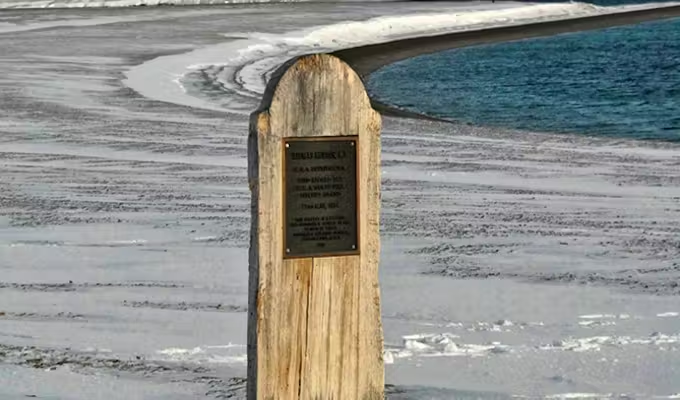
Graves of explorers on Beechey Island
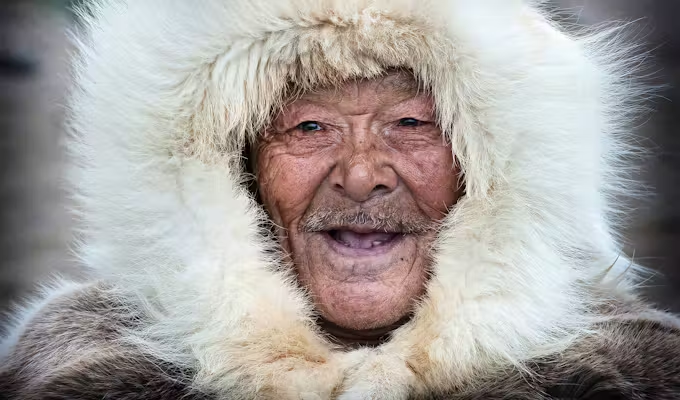
Today, the Canadian Arctic is a dynamic and stunning part of the world. Travellers to this region can expect a warm welcome from the isolated Inuit communities they visit, who'll share their oral history and offer a rare glimpse into their traditional way of life.
Simultaneously, the melting sea ice is altering the ecosystem and further opening up the once ice-choked waterways of the Northwest Passage making it more accessible than ever.
However, the rapidly changing environment also affects both the people and animals who live here who have to continually adapt their way of life in order to survive.
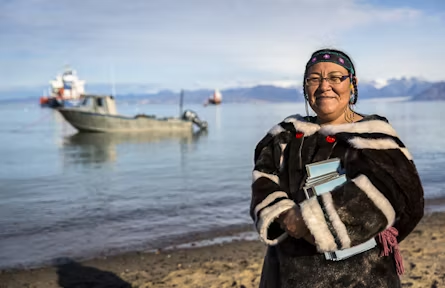
Inuit resident of the Northwest Passage
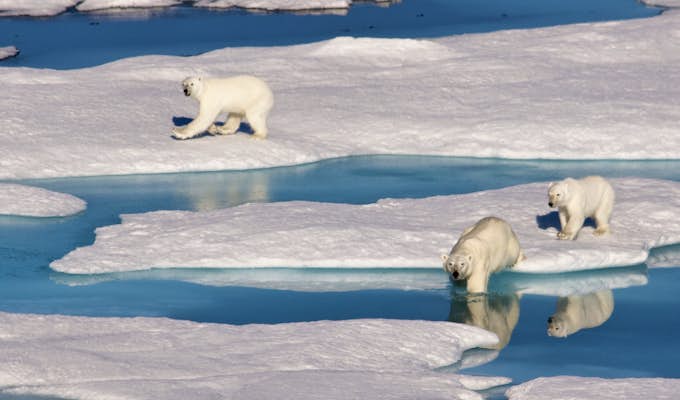
The waterways and islands of the Northwest Passage are home to the famous Arctic Big Five – polar bear, musk ox, walrus, narwhal and beluga whales – alongside reindeer (caribou), seal, arctic fox and lemmings.
In addition, the summer sees an influx of migratory visitors who are making the most of the short breeding season.
Lancaster Sound is a wildlife superhighway for many marine and terrestrial species, forming a unique ecosystem. In August 2017, a momentous step was taken to protect it with the formation of a national marine conservation area twice the size of Nova Scotia.

A polar bear on the ice
This trip was simply marvellous. The hour-long up-close viewing of a female polar bear from the bow of the ship as she crossed the sea ice and put on a show for us was certainly a highlight. The 1,500 pictures I took over the course of this viewing is a testament to this. Read the full review
Travelled: September 2018
Elaine Green - USA
The trip was good, the light gorgeous, the icebergs fantastical, and the wildlife wonderful with more polar bears than expected. The traditional villages made us think about their future, and we met new friends. Read the full review
Travelled: August 2018
Carol & Gerard Yorke - USA
In the absence of any hotels or infrastructure outside the handful and very isolated communities, the best way to explore the Canadian Arctic is on board an expedition ship. Your ship operates as both your floating hotel, mode of transportation and basecamp for daily off ship excursions.
Sandwiched between Alaska and Greenland, Canada’s ‘Far North’ covers a whopping 39% of the country’s total land area, yet is populated by less than 1% of the population. …
Discover More
Exploring by expedition ship delivers unmatched access to the Canadian Arctic’s secluded shores, frozen passageways and isolated settlements. Considering the vast expanses and …
Discover More
The Canadian Arctic is vast and remote, with few roads, limited airports and no public coastal ferry services connecting communities. For visitors wanting to explore beyond the …
Discover More
Our expert team are ready and waiting to answer your questions. Whether it's about a specific ship, the best time to travel, or even what clothing is best for the Arctic, we're …
Discover MoreWe'll spend some time listening to your aspirations, then discuss the kind of experience that might suit you.
Next we'll discuss the options, shortlist the best trips for you and present you our impartial recommendations.
We'll place a 24 hour hold on your preferred option - without obligation - whilst we talk through the details.