Ultramarine
Elegant lines, contemporary styling, onboard helicopters, spacious balconied cabins and a wide range of adventure activities; this ship is Ultra by name and ultra by nature. …
Discover More

Choosing a ship for the Canadian Arctic is not a straightforward process – the facilities of the ship might not be so important to you compared to the style of the team on board. We've sailed on as many ships as possible, so we can help with those crucial details.
Alex Mudd Head of Swoop Arctic
Elegant lines, contemporary styling, onboard helicopters, spacious balconied cabins and a wide range of adventure activities; this ship is Ultra by name and ultra by nature. …
Discover More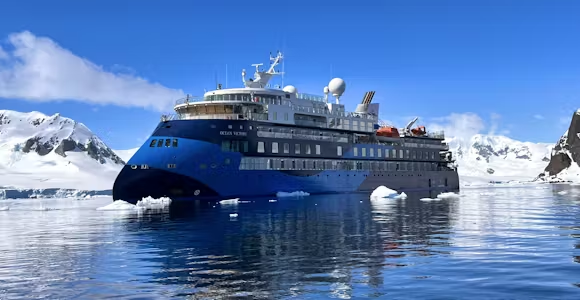
With exceptional onboard technology and superior-quality accommodation, Ocean Victory is one of the most modern small ships for the polar regions.
Discover More
Potential could be this ship's middle name. Few can compete with it's ability to traverse the full Northwest Passage and carry out landings with specialist guides.
Discover More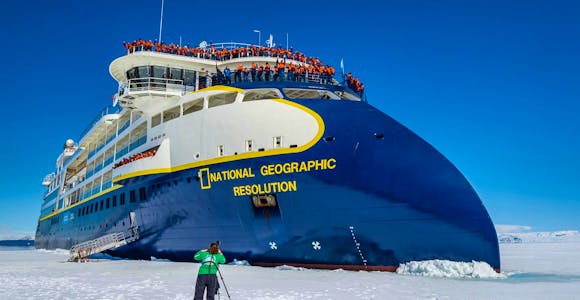
Purpose-built for polar exploration, this slick European-designed ship combines an ice-strengthened hull with cutting-edge X-Bow technology.
Discover MoreFaultless service, as always in our experience. We knew the ship and even the cabin beforehand, but great to have Swoop’s help in setting it up and talking us through the options for the choice of voyage and extras. Read the full review
Travelled: July 2018
Steve & Tina O'Shea - United Kingdom
These spacious expedition vessels offer a wider range of cabin options – with top-tier accommodation often featuring private balconies – and place more emphasis on hotel-style service. You’ll still enjoy daily landings and plenty of adventure along the way.
Elegant lines, contemporary styling, onboard helicopters, spacious balconied cabins and a wide range of adventure activities; this ship is Ultra by name and ultra by nature. …
Discover More
With exceptional onboard technology and superior-quality accommodation, Ocean Victory is one of the most modern small ships for the polar regions.
Discover More
Originally built to navigate Greenland’s ice-choked waters, Ocean Nova is a highly capable and comfortable ship.
Discover More
Potential could be this ship's middle name. Few can compete with it's ability to traverse the full Northwest Passage and carry out landings with specialist guides.
Discover More
A state-of-the-art, hybrid-powered vessel, equipped to traverse the Northwest Passage. With a science centre, sauna, and restaurants, this isn’t a mere cruiser.
Discover More
This state-of-the-art ship honours the highly accomplished marine biologist and oceanographer, Sylvia Earle. Sister ship to the Greg Mortimer, she similarly boasts stylish lines …
Discover MoreKayaking is a popular optional add-on only offered by certain ships. If adventure options are your priority, double check your preferred ship offers them.
Right at the pinnacle of luxury, these super-yacht-style ships offer impeccable service and all the high-end amenities you’d expect. Yet despite the elegance, you’ll still be bundling up for daily off-ship adventures as you explore the icy reaches of the north.
Purpose-built for polar exploration, this slick European-designed ship combines an ice-strengthened hull with cutting-edge X-Bow technology.
Discover More
Purpose built expedition ships with state of the art luxury and five-star service for their 264 guests traveling in serious comfort.
Discover More
Navigating the ice of the Northwest Passage

Graves of explorers on Beechey Island

Humpback in the Northwest Passage

Bylot Island

Cape York in the Canadian Arctic

Zodiacs explore the ice in the Northwest Passage

Aurora over the Canadian Arctic

The abandoned trading post at Port Leopold

Prince Leopold Island
There are three main variables - alongside luck, which none of us can control - to bare in mind when it comes to giving yourself the best chance of seeing polar bears:
1. Length of trip: Put simply, the longer your trip the greater your chances of wildlife encounters
2. The Itinerary: While polar bears are very nomad, there are well-known polar bear ‘hotspots’ (e.g. Coningham Bay, Lancaster Sound, Croker Bay and Bellot Strait)
3. Calibre and size of the expedition team: You want a big and very experienced team, as that means there will always be lots of sets of eyes on watch for wildlife. And, secondly, from experience, they’ll also know where to look, which will further improve your chance of successful sightings
This is a key question, and in the Northwest Passage there are several ways to think about it:
Firstly, you should consider what's most important to you, as there are trade-offs. A smaller ship typically lends itself to a more intimate experience, where you’ll get to know a greater proportion of your fellow passengers, and getting on and off the ship will be speedier.
However, the anonymity of a larger ship, alongside normally more on-ship amenities and a wider choice of dining locations (particularly on a longer voyage) can be attractive. There’s no right or wrong answer, it's simply down to personal choice.
The other way to look at it – given the relatively limited number of Northwest Passage itineraries and ships – is to focus on choosing the right trip first, as depending on which you choose, there may only be one or two ships from which to choose.
Yes, the majority of them have all of these, plus in a number of cases some also offer hot tubs.
As a team, we at Swoop Arctic are big fans of having a balcony, and here’s why:
All of the ships which operate in the Canadian Arctic are modern expedition ships and have active stabilisers which through reducing side-to-side ‘roll’ by over 85% can be said to be highly effective.
A number of ships are also X-Bow designed, which allows them to cut through the water in a very efficient and smooth way.
It's a good question, but ultimately a very personal one, if comfort, service, access to amenities, gourmet food and an all-inclusive price are important to you, and worth paying more for.
Interestingly, when it comes to certain Arctic ships which are considered Luxury, for a relatively modest additional investment you can get a lot for your money.
This is a tricky question to answer as there’s always a slice of luck involved when it comes to wildlife sightings. However, in our experience, smaller ships have a higher chance of better wildlife sightings because:
When it comes to landings, this is where having fewer guests on board carries a distinct advantage as it means:
We'll spend some time listening to your aspirations, then discuss the kind of experience that might suit you.
Next we'll discuss the options, shortlist the best trips for you and present you our impartial recommendations.
We'll place a 24 hour hold on your preferred option - without obligation - whilst we talk through the details.