
Arctic Cruises
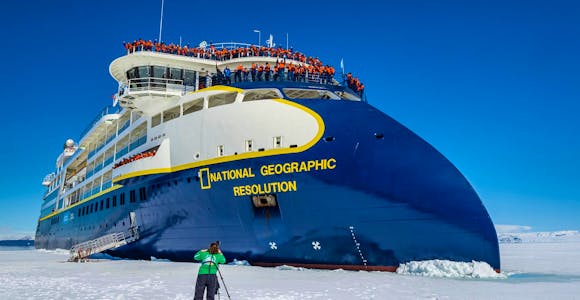
Expeditionary cruising is a very practical way to discover the Arctic, allowing you to comfortably explore often untouched areas of wilderness you can’t otherwise reach from …
Discover More
You hear about it, but you never truly believe it until you’re there, standing under the bright sun at 3am. You don’t notice until you look at your watch, and then it stops you in your tracks.
Karl ONeill Arctic Sales Specialist
Special Offers:Swoop has access to the widest range of offers and can help you find the right trip, cabin, & price.

Experience the Arctic’s legendary wildlife aboard an intimate micro expedition ship, amidst a pristine backdrop of calving glaciers, and snow-capped mountains. With an unmatched sense of ‘expedition’ and a deeper connection to nature, you build your own adventure, searching for…

This popular introduction to Svalbard is keenly priced and, with numerous early season departures, guarantees plenty of ice. Sail onboard one of the newest ships in polar waters and spot bears from the plentiful deck space. Optional kayaking and hiking…

Maximise wildlife sightings with the chance to circumnavigate Spitsbergen island. Search for walrus, arctic fox, whales and of course the ‘King of The Arctic'. Sail through the Hinlopen Strait and visit abandoned trapping stations and experience glaciers up close all…

Truly escape the modern world and explore Svalbard on board a schooner. Sail north through the melting spring ice, spot wildlife and learn about the archipelago’s rich history. Highlights include the Monaco Glacier, 17th century whaling settlements, close encounters with…

Circumnavigate Spitsbergen on board on a comfortable expedition ship and in the company of specialist guides. Travelling on a smaller ship allows you more time to explore, and some late-season departures benefit from stunning autumn light. Ask about special guest…
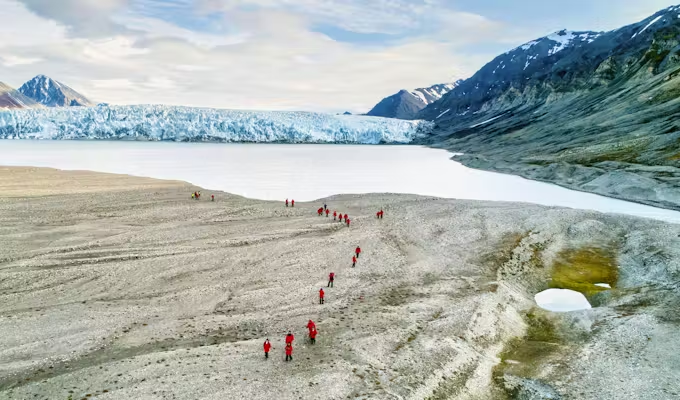
Travelling in luxury aboard an outstanding expedition ship, we love this trip for its unusual combination of Svalbard and Norway’s northern tip, plus its focus on top-notch service and cuisine. After a hassle-free flight from Oslo to Svalbard, spend seven…
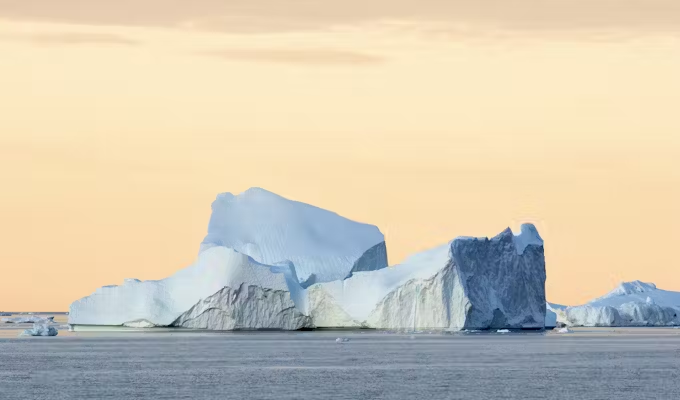
This might be a short trip but it packs a huge amount in. Sail among the ice of Disko Bay and spot humpbacks hunting herring; trek to the look out over Jakobshavn Glacier; explore the settlements of Sisimiut and Itilleq…

Embark on this epic fly and cruise 11- or 12-day expedition into the wildest, least visited corner of Greenland, which combines the labyrinthine Scoresbysund fjord system with the vast Northeast Greenland National Park. By day, navigate spectacular fjords and pass…
Anywhere inside the Arctic Circle.
This intangible line marks the latitude (66.34°N) beyond which the sun never sets for at least one night a year. The further north you go, the longer the period of Midnight Sun.
At somewhere like Svalbard, at 78°N, the midnight sun lasts all summer, and on the solstice it stays almost directly overhead.
In the summer months, typically June and July, but further north including Svalbard, May and August too.
The Midnight Sun occurs because of the planet's axial tilt. As the Earth rotates, the regions inside the polar circle remain angled toward the sun, preventing it from going below the horizon.
Yes, you'll still see the sun moving in the sky, but instead of setting, it will sink towards the horizon around midnight, then move along it before rising again. When the sun is at a low angle, it creates a special 'golden hour' light.
Potentially, yes, but there are lots of ways to prevent that from happening and being an issue.
Firstly, all ships that travel to the High Arctic are well aware of the midnight sun and will provide blackout blinds. If you want to be extra-sure, it's not unusual for travellers to bring and wear their own eye-masks to bed.
Secondly, just make sure you stick to your regular sleep schedule. Set an alarm for when it's time to switch off, as the light doesn’t give you any of the usual visual clues.
The short answer is 'no'. During the Arctic summer it will be much too bright all night to see the Northern Lights, which require dark, clear skies to have a chance of seeing them in northerly latitudes.
So experiencing both the Midnight Sun and Northern Lights at the same time is impossible – it can only be one or the other.
Under the Midnight Sun, Svalbard becomes a land without darkness. With 24 hours of daylight, the landscape takes on an almost otherworldly quality, giving you more time to explore, photograph and experience the Arctic in all its summer glory.
Swoops dedication and care to achieve a high value, high quality experience is exceptional. Staff are extremely knowledgeable about the ship, and the itinerary of the expedition and are able to offer the best advice to maximize the travel experience. Read the full review
Travelled: June 2018
Rob & Bonnie Lesnick - United States Of America
The Midnight Sun is caused by the Earth's natural ‘tilt’. The world doesn’t spin vertically like a top, but leans to one side by 23.5°.
That means for half of the year, the northern hemisphere gets more light than the southern and vice-versa – these are our seasons.
As the world rotates (our days) the tilt means that the further north you are in the summer, the longer the days are.
Importantly for travellers to the Arctic, when you get above 66.5°N the sun never sets at all.

So why does the Earth tilt? Our best guess at the moment is called the 'Theia Impact Hypothesis'. It sounds complicated, but don’t worry, it isn’t. The theory suggests that a long time before life existed on our planet, approx 4.5 billion years ago, the earth stood upright and orbited the sun without its moon.
Another planet named Theia, crossed orbits with our Earth and the two collided, nearly destroying our world. This massive hit caused the earth to wobble and lean, before eventually settling again, almost. The world still wobbles between 22° and 24.5° but that takes about 40,000 years.
Interestingly, the debris from the impact, bits of both Earth and Theia are thought to have coalesced to form our moon.

Expeditionary cruising is a very practical way to discover the Arctic, allowing you to comfortably explore often untouched areas of wilderness you can’t otherwise reach from …
Discover More
Choosing to visit the Arctic is the easy part, but what can you expect to do and see once you arrive? From daily zodiac safaris, guided shore landings, insightful lectures and …
Discover More
The Arctic is one of the most diverse wildlife habitats on Earth, harbouring a vast array of animals adapted to the extreme cold. Polar bears and walrus can be spotted on the sea …
Discover More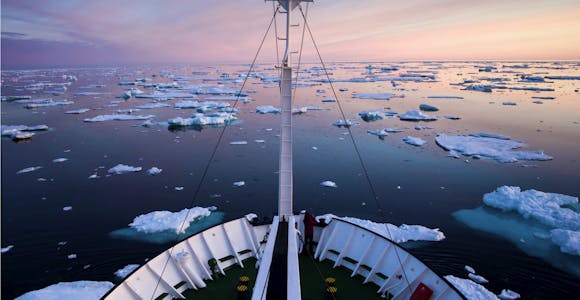
We partner with selected ice-strengthened Arctic expedition vessels from small yachts and nimble little ships with convivial atmospheres, to larger Russian research boats and …
Discover MoreWe'll spend some time listening to your aspirations, then discuss the kind of experience that might suit you.
Next we'll discuss the options, shortlist the best trips for you and present you our impartial recommendations.
We'll place a 24 hour hold on your preferred option - without obligation - whilst we talk through the details.