




Northwest Passage Cruises
This labyrinthine waterway was long sought by early adventurers as a sea route linking the Northern Atlantic and Pacific Oceans. Canada's Arctic archipelago is therefore no …
Discover More
There’s no way to overexaggerate just how fundamental zodiacs are to the whole Arctic expedition experience. By enabling you to get off the ship and experience the Arctic up close, zodiacs are truly transformative. They're also loads of fun.
Nardus Erasmus Arctic Sales Specialist
Special Offers:Swoop has access to the widest range of offers and can help you find the right trip, cabin, & price.
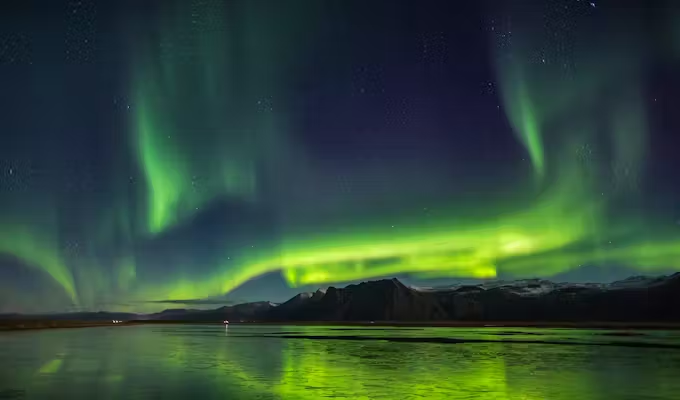
Sailing in August or September, explore the massive fjords of East Greenland and their legendary icebergs, spot musk oxen and visit ancient and modern Inuit settlements. Late summer provides a great chance of spotting the Northern Lights. A choice of…
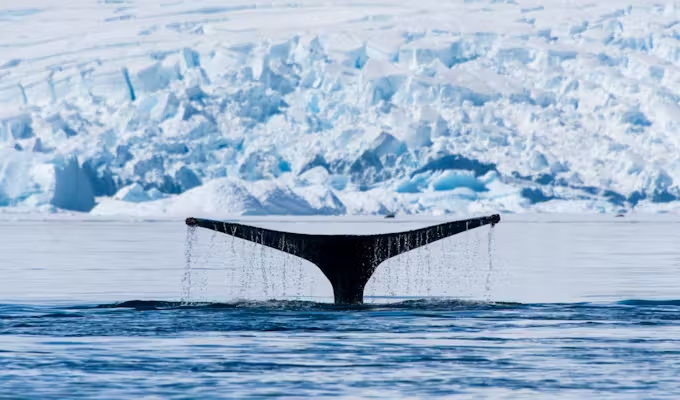
Exploring East Greenland’s wild, dramatic coastline on board a small, custom-built polar ship, this is expedition cruising at its very best. Hike the autumnal tundra in search of musk oxen during the day, with a strong chance to see the…
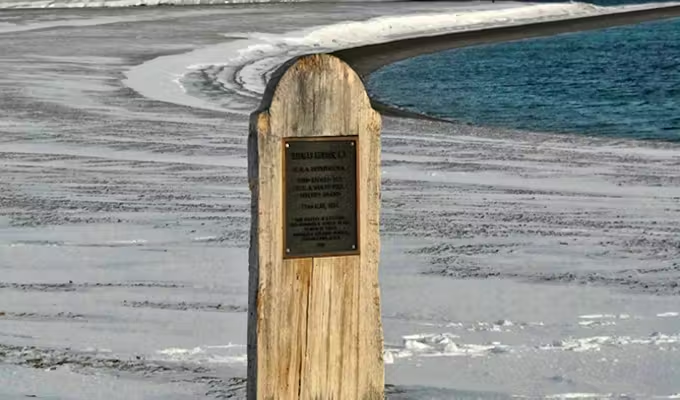
The big ice and small towns of West Greenland provide a stunning start to this trip before you sail across the Davis Straight to Baffin Island and enter the Northwest Passage. Blend history, scenery and wildlife; pay your respects at…
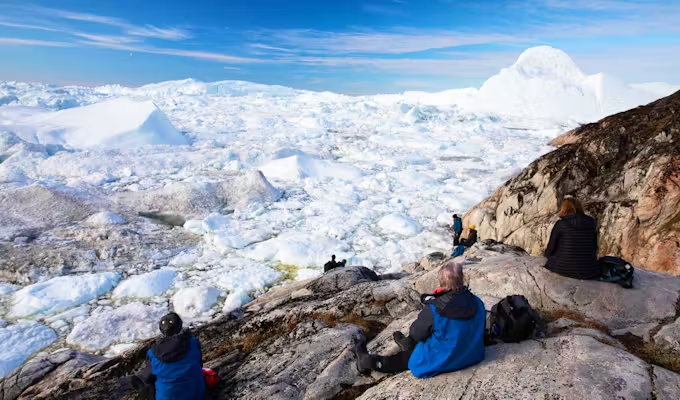
A full transit of the Northwest Passage is a truly epic undertaking, travelling in the footsteps of legendary explorers Amundsen, Franklin and Larsen. This voyage is distinguished by the small, nimble and comfortably appointed expedition ship you'll travel on, with…

Maximise wildlife sightings with the chance to circumnavigate Spitsbergen island. Search for walrus, arctic fox, whales and of course the ‘King of The Arctic'. Sail through the Hinlopen Strait and visit abandoned trapping stations and experience glaciers up close all…
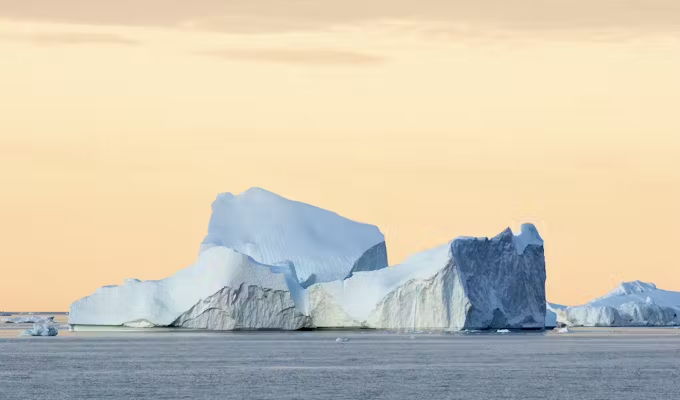
This might be a short trip but it packs a huge amount in. Sail among the ice of Disko Bay and spot humpbacks hunting herring; trek to the look out over Jakobshavn Glacier; explore the settlements of Sisimiut and Itilleq…

Truly escape the modern world and explore Svalbard on board a schooner. Sail north through the melting spring ice, spot wildlife and learn about the archipelago’s rich history. Highlights include the Monaco Glacier, 17th century whaling settlements, close encounters with…

Circumnavigate Spitsbergen on board on a comfortable expedition ship and in the company of specialist guides. Travelling on a smaller ship allows you more time to explore, and some late-season departures benefit from stunning autumn light. Ask about special guest…
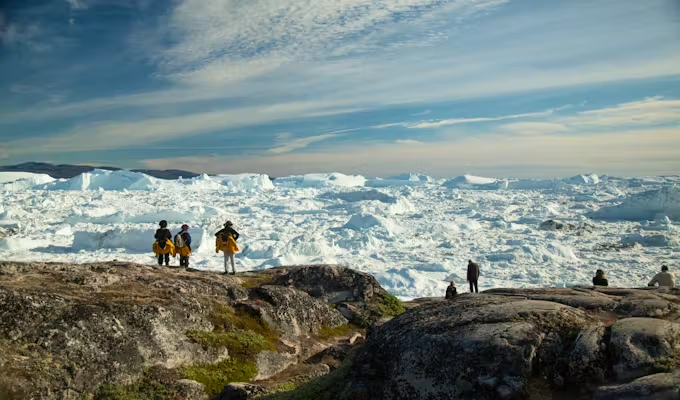
Spending time exploring Canada’s historic Northwest Passage and West Greenland, we like this voyage’s balance and variety as much as exploring little visited spots such as Thule, one of the northernmost towns in the world, and Smith Sound. Big ice,…
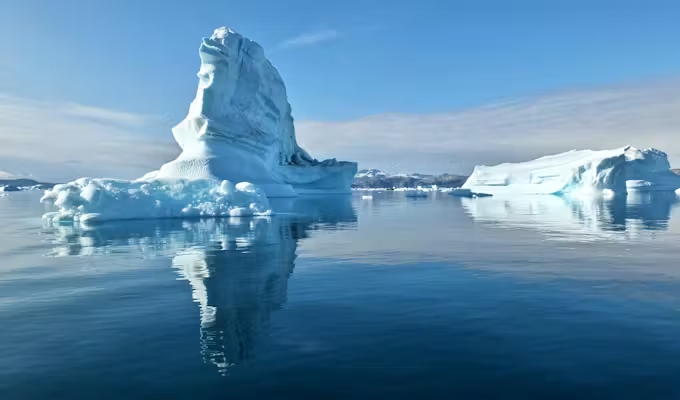
Beginning in Svalbard before sailing west across the Greenland Sea and exploring Greenland’s long eastern coastline to finish in Iceland, this is an audacious Arctic journey of startling diversity and contrast. Spectacular landscapes, towering glaciers and once-in-a-lifetime wildlife encounters all…

There are few wilder, more remote places on the planet than East Greenland. Travelling by a small, very comfortable custom-built expedition ship, this voyage aims to showcase the best of Greenland’s eye-popping scenery, vast ice and exotic wildlife. Walk the…
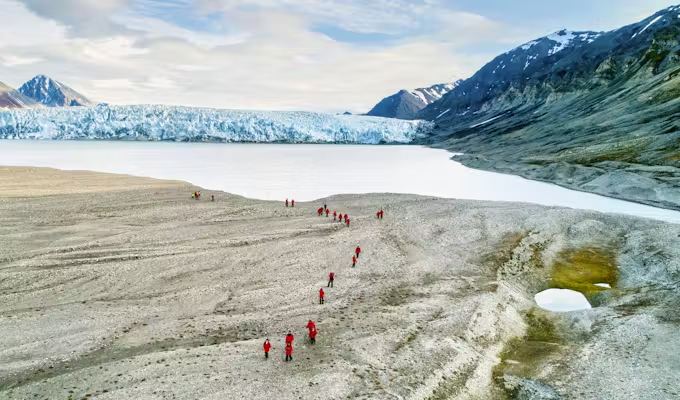
Travelling in luxury aboard an outstanding expedition ship, we love this trip for its unusual combination of Svalbard and Norway’s northern tip, plus its focus on top-notch service and cuisine. After a hassle-free flight from Oslo to Svalbard, spend seven…

This popular introduction to Svalbard is keenly priced and, with numerous early season departures, guarantees plenty of ice. Sail onboard one of the newest ships in polar waters and spot bears from the plentiful deck space. Optional kayaking and hiking…

Reach the top of the world in serious comfort onboard a state-of-the-art luxury, hybrid-powered icebreaker. Travel north through icebound waters and join the exclusive list of intrepid explorers who have visited the geographical North…

Nardus in Svalbard

Photograph icebergs on zodiac cruises

Zodiac excursion amongst icebergs

Zodiac cruising in Svalbard

Zodiac excursion at Monaco Glacier

Zodiac excursion at Bear Islands
Zodiacs are the workhorses of Arctic expedition cruising. These large, heavy-duty inflatable boats are also known as a rubber inflatable boats (RIBs). Up to a dozen passengers, plus a driver, can be seated in one and they are used for transferring guests to and from the ship.
Zodiacs are agile, swift and sturdy, making them the perfect vessels for polar environments. Their minimal draft allows them to reach secluded spots or remote shorelines, while their low centre of gravity ensures passenger stability and simple handling for their drivers. They represent the ultimate tool for navigating through ice-choked waters safely.
Internally, zodiacs have six air-filled internal compartments of very hard rubber for flotation. These are connected by valves to regulate pressure, allowing the craft to maintain buoyancy even if one compartment should become deflated. They’re a very safe and reliable form of transport.

Zodiac cruising close to big ice
Zodiac cruises can offer some truly wonderful wildlife encounters. As well as being an ideal platform from which to experience some of the vast numbers of migratory birds who flock to the Arctic during the summer, look out for reindeer grazing the tundra and Arctic fox foraging around the base of bird cliffs.
These nimble boats let you navigate the ice edge to find bearded seals resting on floes, or witness the huddling mass of a walrus haul-out, hearing their grunts (and experiencing their odour) from a safe distance.
While a fervent wildlife dream might be spotting a polar bear prowling the edge of an ice floe from your zodiac, realistically given the minimum distances which need to be maintained and the limitations of viewing from water level, the best bear sightings are almost always from your ship’s upper decks.

Zodiac excursion at Bear Islands
It’s normal for travellers to head North with polar bears in mind but return haunted by the staggering, crystalline beauty of the Arctic ice. Many of these profound moments occur while bobbing in the water on a Zodiac excursion.
Zodiacs are the perfect craft for scouting rugged shorelines unreachable by ship, weaving through the deep fjords of Svalbard or Greenland. The ice here is spectacularly diverse: crackling brash ice, vast flat floes where seals might be hauled out, and large icebergs that have run aground, their ancient blue faces carved into surreal shapes by the elements.
The nimble nature of a zodiac allows for total spontaneity during your outing, enabling your expedition guide to change course instantly for a distant blow of a whale or pause to capture the perfect light on a spectacular chunk of ice.
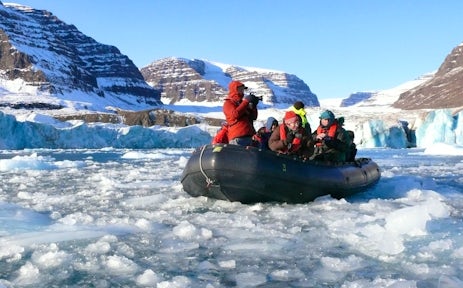
Taking a zodiac through the ice
Your ship's expedition crew are also expert zodiac pilots, ensuring every excursion is led by a biologist, photographer or polar historian. They apply their specialised expertise to interpret everything you encounter – transforming onboard lectures into live field observations that enrich your Arctic journey.
Zodiacs serve as vital hubs for various citizen science initiatives. Something as simple as lowering a Secchi disk to measure water clarity can be a deeply impactful experience, evolving you from an observer into a contributing researcher, and potentially reshaping your entire understanding of the fragile Arctic environment.

High-quality waterproof and windproof gear is vital for every zodiac excursion. You will receive a detailed packing guide well before your departure to ensure you're fully prepared.
Wearing multiple layers is arguably more critical for cruising than for shore landings. Since you remain stationary in the boat, your body temperature can drop surprisingly quickly; when undecided, always add an extra fleece. Given that Arctic weather shifts in an instant, it is wise to dress for the most challenging conditions possible.
Expect some splashing from ocean spray and waves during your excursions. Beyond your own clothing, prioritise protecting your gear – always pack a sturdy dry bag for your belongings, plus specialised waterproof covers for both your camera and phone.

Zodiac cruising in Svalbard
First-timers are often daunted by their initial zodiac boarding, yet they quickly adapt with the confidence of a seasoned mariner. Guests of all ages are welcome, provided they possess a baseline level of physical mobility and balance.
Lifejackets are mandatory for every excursion. When moving between the ship and the boat, the expedition crew provides a steady hand to help you step safely across. Once underway, you’ll simply sit along the inflated pontoons.
Operations only proceed in stable conditions; cruises are cancelled if winds or swells become excessive. Should the weather shift mid-trip, your pilot will prioritise a swift, safe return to the vessel. Rest assured that even in choppy seas, the boat's wide, low design makes it exceptionally stable and nearly impossible to capsize.

The stable design of zodiacs makes them fantastic platforms for photography. Your expedition guides will strive to ensure you have every chance to capture the Arctic’s highlights from the water; many are passionate photographers who instinctively position the boat for the perfect light and angle.
When the craft is stationary in calm conditions, your guide may permit you to stand for a better vantage point. For safety, you must only do so when explicitly invited and remain seated whenever the zodiac is in motion.
Since you are exposed to salt spray and wind, swapping lenses is not recommended during the cruise. Bringing specialised waterproof protection for your camera is vital, especially to shield your gear from splashes while traveling between locations.

Photographing the scenery from a zodiac
The shared experience of a zodiac cruise is one of the most exhilarating aspects of any Arctic expedition: there’s nothing like weaving through a labyrinth of icebergs or catching sight of wildlife to break the (metaphorical) ice between fellow travellers.
Zodiacs are remarkably secure vessels. Their wide, stable design and multiple air-tight internal chambers make them practically impossible to capsize or submerge.
For your protection, excursions only occur during favourable weather. Should winds strengthen or swells rise beyond safety limits, water operations will be suspended.
Only certified expedition guides are permitted to pilot these crafts. Throughout every tour, they maintain continuous radio communication with the vessel and fellow drivers. While navigating, the pilot uses a safety kill-switch linked to the motor, ensuring the engine cuts immediately in an emergency. Furthermore, every zodiac is equipped with comprehensive medical and survival gear to handle any unforeseen conditions during your outing.
Boarding and exiting a Zodiac is much simpler than it first appears, easily handled by anyone with reasonable mobility.
When moving to or from the ship, you’ll use a set of stairs to reach the boat. Crew members will provide a steady hand during the process.
For shore excursions, you’ll perform a 'wet landing' – shifting to the side in shallow water before swinging your legs over the pontoon. This movement quickly becomes instinctive.
In choppy conditions, extra caution is required when stepping across, but the expedition team will be there to support you every step of the way.
Zodiac cruises usually last between 45 minutes and two hours, depending on the weather, location and how comfortable everyone in the boat is.
While two hours might sound like quite a long time, in reality you’ll find that it whizzes past, absorbed as you are by your surroundings, the stories told by your expedition guide who is also driving the zodiac, and the whole quadraphonic Arctic experience going on around you, assaulting all of your senses.
The question of comfort breaks during both these zodiac cruises and during onshore landings crops up quite often. With no bathroom facilities available to either, holding back on that second pre-excursion coffee can often be the wisest policy.
Zodiac cruises offer the opportunity for some of the most intimate wildlife encounters in the High North. You might watch puffins diving nearby, drift silently past a bearded seal resting on an ice floe, or be lucky enough to witness whales from water level.
There are strict Arctic guidelines that dictate zodiacs must not approach most wildlife closer than 30 metres. Specific regulations in Svalbard, which came into force on January 1st 2025, require a minimum distance of 300 to 500 metres (depending on whether you travel before or after July 1st) to be maintained with polar bears to prevent disturbance.
While we appreciate that for many guests it's the wildlife - and the polar bear in particular - which was the original catalyst for the whole trip, there’s a tricky balance which needs to be struck between our own expectations and the safety and welfare of the wildlife.
Ultimately, it's beholden on us as visitors to respectfully ensure that our behaviour, while in their own backyard, doesn’t adversely impact the wildlife in any way.
This labyrinthine waterway was long sought by early adventurers as a sea route linking the Northern Atlantic and Pacific Oceans. Canada's Arctic archipelago is therefore no …
Discover More
At the very top of the world, where all lines of longitude unite, lies a privilege experienced by only a fortunate few. Many dream of this legendary milestone, yet only a handful …
Discover More
Halfway between Norway and the North Pole, Svalbard distils the best of the Arctic into one remarkable archipelago. In high summer, largely ice-free coastlines reveal calving …
Discover More
Greenland assaults your senses by its sheer scale, untamed rawness, ravishing beauty and remoteness, while her people will charm you with their hospitality. From Scoresby Sund’s …
Discover MoreWe'll spend some time listening to your aspirations, then discuss the kind of experience that might suit you.
Next we'll discuss the options, shortlist the best trips for you and present you our impartial recommendations.
We'll place a 24 hour hold on your preferred option - without obligation - whilst we talk through the details.