Polar Bear Tours
The world’s largest land carnivore, these majestic nomads are the Arctic’s ‘poster boy’ and so often the catalyst for many travellers to head north. All those who have …
Discover More

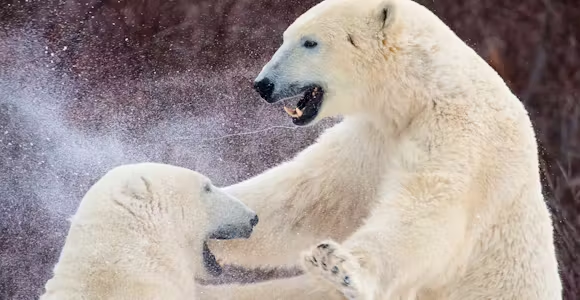
On the hunt, the polar bear's sheer size, intense focus, and explosive force showcases the raw power of this apex predator, revealing a creature perfectly engineered to dominate one of most unforgiving wild environments on Earth.
Karl ONeill Arctic Sales Specialist
Special Offers:Swoop has access to the widest range of offers and can help you find the right trip, cabin, & price.
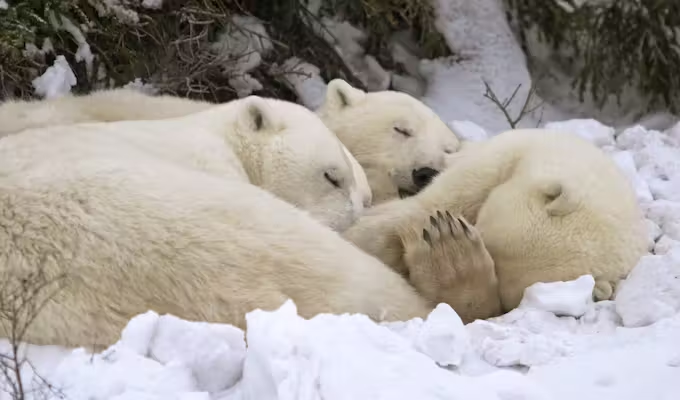
For the ultimate polar bear and High Arctic experience, look no further. Two full days of polar bear spotting are combined with dog sledding, flightseeing by helicopter to a bear’s denning site and the chance to see the shimmering Northern…
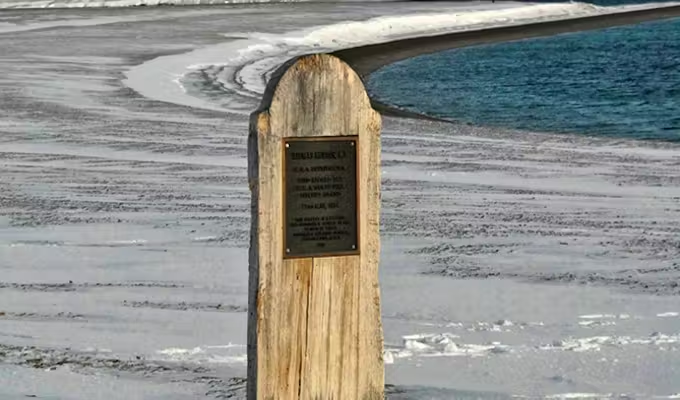
The big ice and small towns of West Greenland provide a stunning start to this trip before you sail across the Davis Straight to Baffin Island and enter the Northwest Passage. Blend history, scenery and wildlife; pay your respects at…

Maximise wildlife sightings with the chance to circumnavigate Spitsbergen island. Search for walrus, arctic fox, whales and of course the ‘King of The Arctic'. Sail through the Hinlopen Strait and visit abandoned trapping stations and experience glaciers up close all…

This popular introduction to Svalbard is keenly priced and, with numerous early season departures, guarantees plenty of ice. Sail onboard one of the newest ships in polar waters and spot bears from the plentiful deck space. Optional kayaking and hiking…
This polar bear photo safari provides the best possible opportunity and environment in which to capture images of the world’s largest living land carnivore. Three full days out on the tundra, near guaranteed sightings and the chance to observe these…
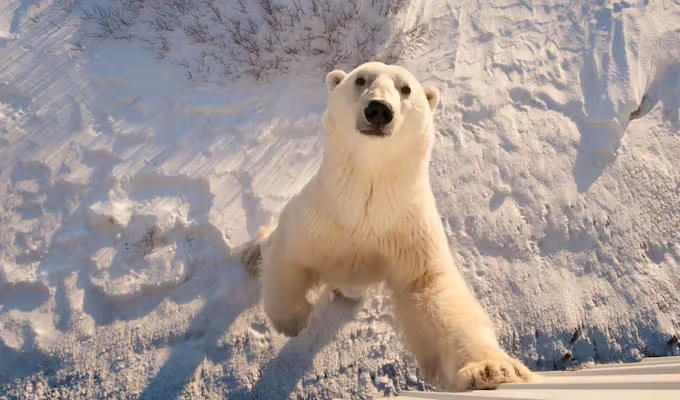
Encounter the King of the Arctic up close, with an exceptionally high chance of sightings in October and November. Small groups explore the tundra in exclusive vehicles with a specialist guide when the bear migration peaks. You'll also learn about…
Experience one of the most immersive wildlife experiences on earth and stay out on the tundra among the bears for three or four nights in a mobile hotel provides unparalleled opportunities for prolonged observation of polar bears at close quarters…

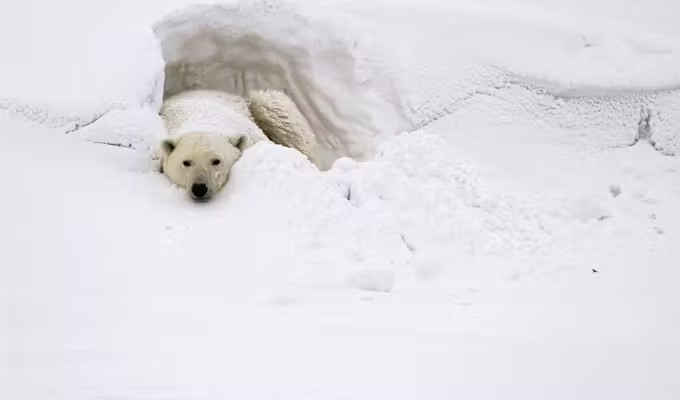
Resting polar bear
Polar bears are incredibly well suited to their environment. As apex predators, their bodies are designed for hunting and full of adaptations to keep their temperatures regulated.
To hunt in these barren conditions, polar bears have developed an incredible sense of smell as well as sharp claws and teeth, perfect for tearing flesh and anchoring themselves to the ice. Once their prey has been spotted, the thick fur on their paws acts to both stop the bear from slipping when chasing their prey, but also to muffle their sounds so seals don't hear them approaching above the ice.
Polar bears have two layers of fur – short thick hairs close to the body trapping a warm layer of air, and long hollow guard hairs which are water repellent. These hairs grow from the bear's black skin, adapted to absorb the warming rays from the sun. Small ears and appendages also reduce heat loss from these massive mammals.
A mother stretching with her cubs
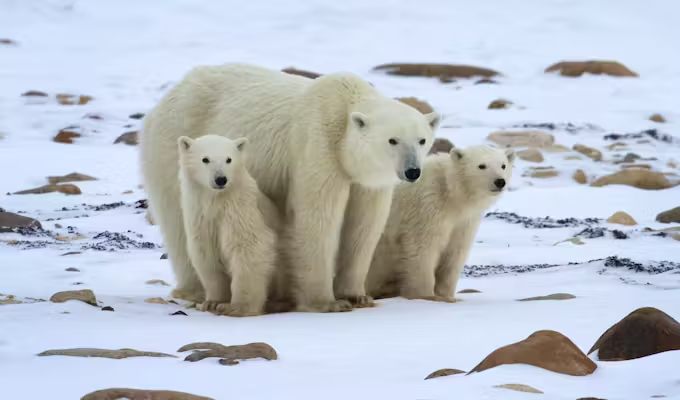
Mom and two cubs
Mom and cub in November
Otherwise solitary creatures, breeding season is the only time when adult bears choose to interact. The reproductive season of polar bears typically begins in April and ends in June each year.
After fertilisation occurs, egg implantation doesn't happen immediately. The process waits until the mother bear's body is fully prepared to get through not only winter hibernation but also pregnancy, birthing and rearing her young.
When she has sufficient weight on her body, she's usually good to go. This generally happens at the end of September in a process known as delayed implantation.
Mothers carry their young for around three months, giving birth in December or January. Although litters can range from one cub to four, typically the polar bear litter will consist of a set of twins weighing just under 24.5 ounces each.
The young are reared entirely by their mothers who continue to nurse them until they're 18 to 30 months old and weaning occurs. Cubs will then stay at their mother's side until they turn two or three years old and can fend for themselves without her protection.
Polar bears are classified as marine mammals and it is only once they become pregnant that adult females will come ashore in order to den. However, as sea-ice is their principle habitat, they are quick to return to the water once their cubs are able.
The Beaufort and Chukchi Seas are notable as areas in which pregnant females choose to den and give birth on drifting pack ice.

Polar bear with whale carcass
Polar bears are built for a high-fat diet consisting mostly of ringed and bearded seals. Unlike us, they are able to digest fat much more easily than protein and often separate a seal's fatty layer from the less gourmet tissue and muscles, using the gap between their front teeth and molars as a tool for shearing. With increasing competition for kills, consuming the fat as quickly as possible is a matter of survival for smaller bears. Often, the younger, weaker bears are driven away from their kill by larger peers.
Their most common hunting method is still-hunting. The bear uses its excellent sense of smell to locate a seal breathing hole, and crouches nearby in silence for a seal to appear. The bear may lay in wait for hours. When the seal exhales, the bear smells its breath, reaches into the hole with a forepaw, and drags it out onto the ice.
With food scarcity and adequate hunting grounds becoming a greater issue for polar bears, they need the ability to survive long periods without food. To add to this pressure, they may only successfully catch one or two seals out of every ten they hunt. Luckily, their biological adaptations mean that polar bears are able to slow down their metabolism if they haven't had a successful hunt in 7-10 days, buying time until their next meal.
Polar bear on the pack ice in Svalbard
Polar bear hunting for a seal
Young polar bear on the pack ice in far north Svalbard
You'll find the highest concentrations of polar bears along the shorelines, where currents and upwellings in the shallow waters provide richer food sources and prevent the build-up of solid ice during winter.
As they typically feed off marine animals, polar bear populations move with the sea-ice and are highly affected by seasonal changes in sea-ice cover.
In winter the sea-ice extends as much as 400km south of the Bering Strait, which separates Asia from North America, and polar bears extend their range to the southernmost extreme of the ice.
Polar bears are currently classified as vulnerable. Anthropogenic climate change is the primary threat to the species for several reasons. As the summer ice melts earlier and refreezes later, bears are forced onto land, or in open water, for extended periods, limiting their opportunities for hunting their primary prey of seals.
Female polar bears require large fat stores to sustain their pregnancy and produce milk. When females are underweight they give birth to fewer, smaller cubs, or even none at all.
Juvenile bears with lower fat reserves and higher energy demands are first to be affected by starvation during longer ice-free periods.
The Union for Conservation of Nature (IUCN) estimates a potential population decline of over 30% of polar bears by 2050, with studies indicating that in high-emission scenarios, nearly all high-Arctic polar bears could face functional extinction by 2100.
The world’s largest land carnivore, these majestic nomads are the Arctic’s ‘poster boy’ and so often the catalyst for many travellers to head north. All those who have …
Discover More
Deep inside the Arctic Circle and only 500 miles from the North Pole, the archipelago of Svalbard exists at the edge of the inhabitable world. An icy realm on the roof of the world…
Discover More
The centre of a polar bear migration in October and November, the worlds' best place to see northern lights from January to March and a gathering point for thousands of beluga …
Discover More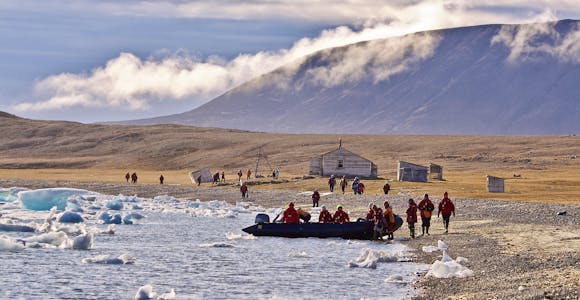
For the explorer, there are few places evocative as the Northwest Passage. For centuries men sought a way through the ice; even today passage is not guaranteed. This is a true …
Discover MoreWhen it comes to wildlife, sightings simply can’t be guaranteed.
However, in places like Churchill in the autumn, where the migration follows a well set and determined pattern, sightings are all but assured.
This depends in which region you are travelling and at what time of year. If you contact us we can guide you through the options.
Churchill is known as the 'Polar Bear Capital of the World' due to the significant numbers of bears that gather there in October and November, waiting for Hudson Bay to ice over again.
In Svalbard you can see polar bears from May to August and in the Northwest Passage during August and September.
Safety is paramount when dealing with any apex predator. Safe sightings can be guaranteed, whether you are viewing from an ice strengthened ship, rubber zodiac or tundra buggy.
Making the correct choice of ship is key. With firsthand experience of all of the ships we offer, let Swoop help guide you to exactly the right one.
We'll spend some time listening to your aspirations, then discuss the kind of experience that might suit you.
Next we'll discuss the options, shortlist the best trips for you and present you our impartial recommendations.
We'll place a 24 hour hold on your preferred option - without obligation - whilst we talk through the details.