


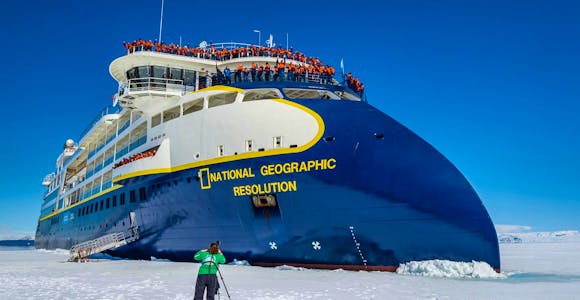
Arctic Cruises
Expeditionary cruising is a very practical way to discover the Arctic, allowing you to comfortably explore often untouched areas of wilderness you can’t otherwise reach from …
Discover More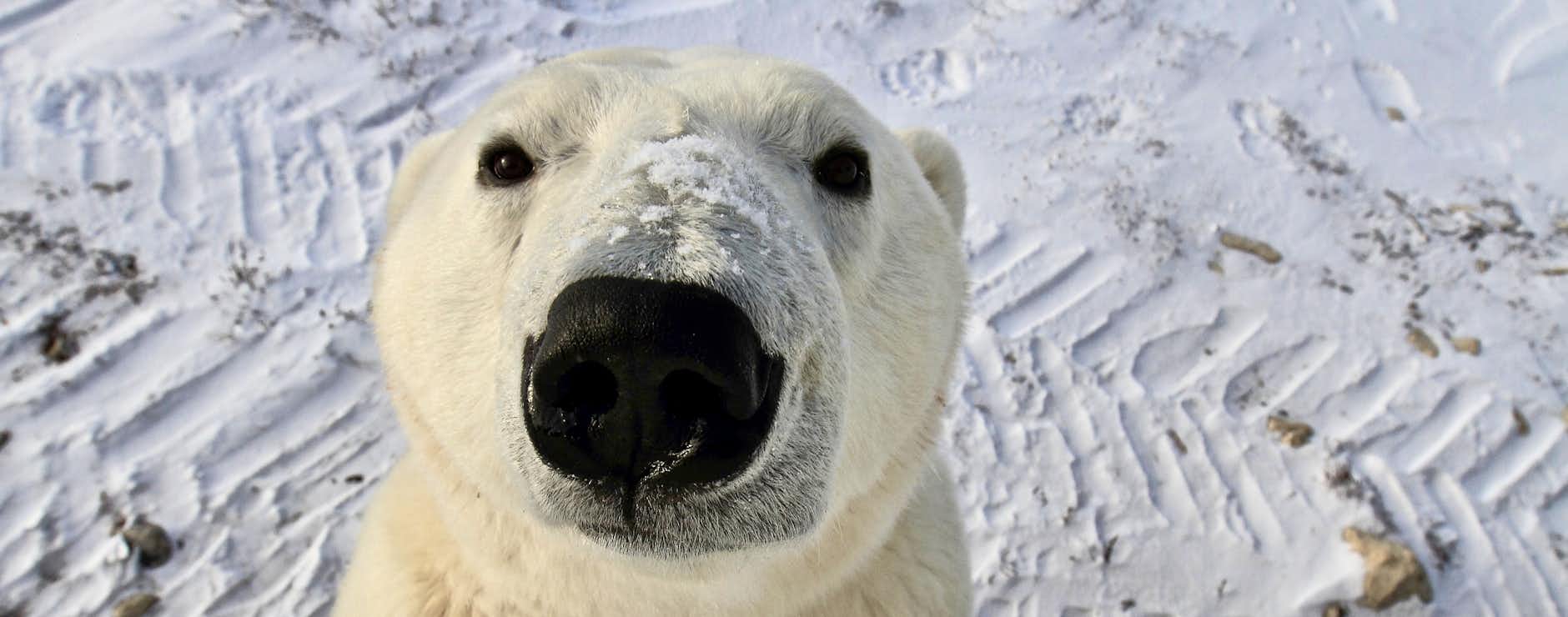
Seeing bears in Churchill is quite amazing, the sight of one sniffing at your vehicle just an arms reach away is completely unforgettable.
Karl ONeill Arctic Sales Specialist


IMPORTANT: Due to their popularity, our polar bear trips are now fully booked for the October and November 2026 season. Booking early is crucial, so please get in touch today to secure your preferred dates for 2027.
Special Offers:Swoop has access to the widest range of offers and can help you find the right trip, cabin, & price.
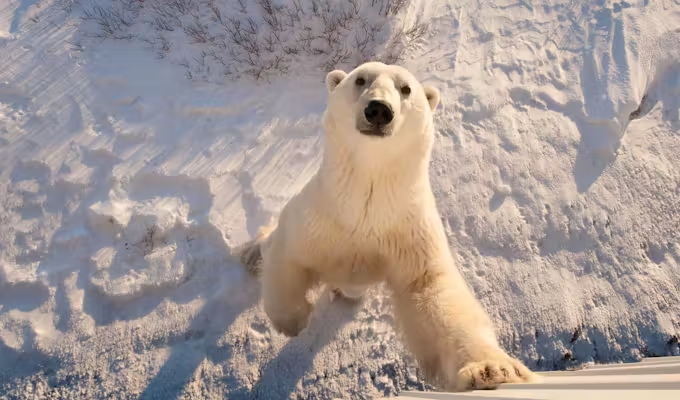
Encounter the King of the Arctic up close, with an exceptionally high chance of sightings in October and November. Small groups explore the tundra in exclusive vehicles with a specialist guide when the bear migration peaks. You'll also learn about…
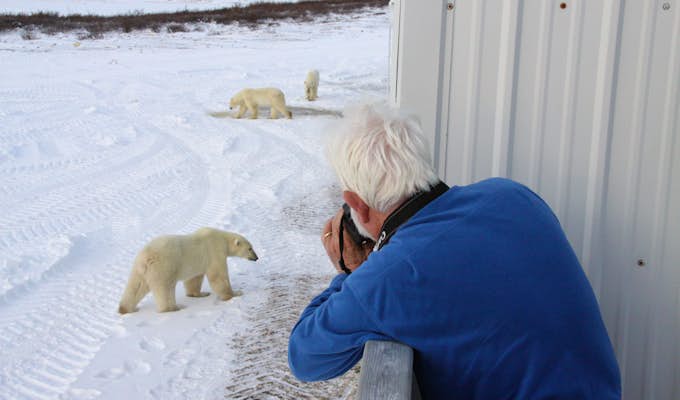
Imagine waking up on the tundra in a mobile hotel with the very real chance of there being a bear outside your window! This trip offers the best of both worlds with two nights on the tundra and two in…
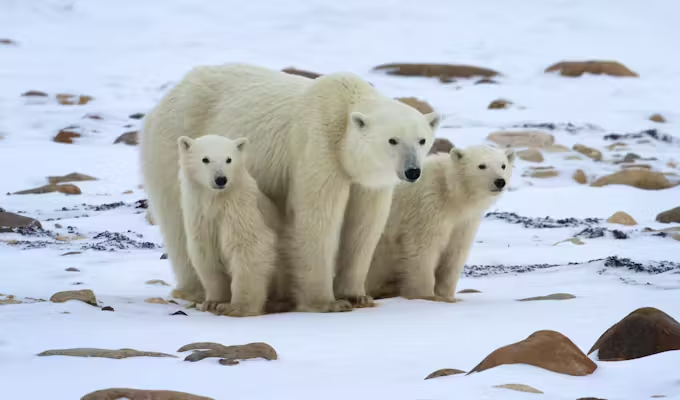
Experience one of the most immersive wildlife experiences on earth and stay out on the tundra among the bears for three or four nights in a mobile hotel provides unparalleled opportunities for prolonged observation of polar bears at close quarters…
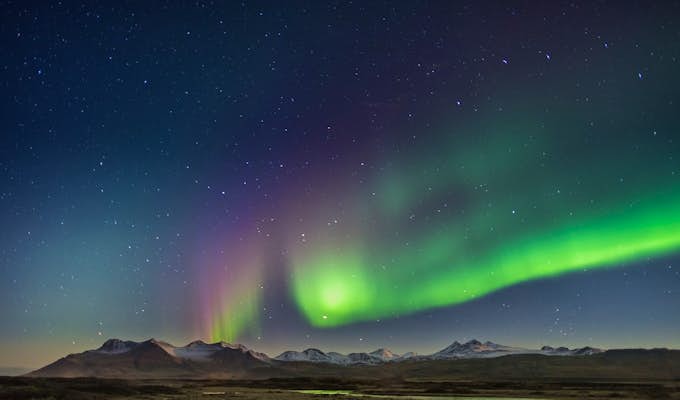
Winter in Hudson Bay is cold but also very dry and that means clear skies and at this latitude that is perfect for spotting the northern lights from a variety comfortable, heated viewing platforms. Day time activities include dog sledding…
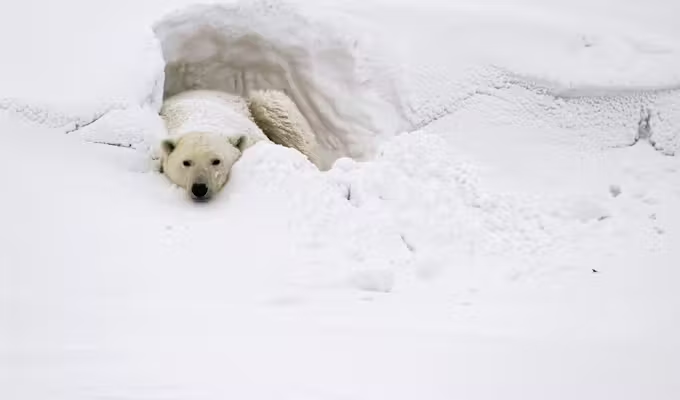
This polar bear photo safari provides the best possible opportunity and environment in which to capture images of the world’s largest living land carnivore. Three full days out on the tundra, near guaranteed sightings and the chance to observe these…
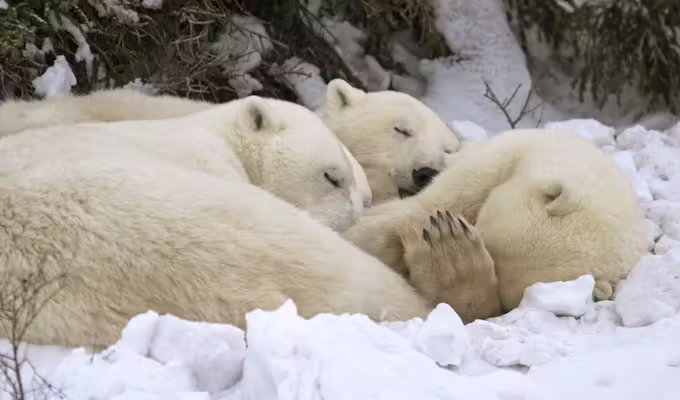
For the ultimate polar bear and High Arctic experience, look no further. Two full days of polar bear spotting are combined with dog sledding, flightseeing by helicopter to a bear’s denning site and the chance to see the shimmering Northern…

A bear in the Churchill snow

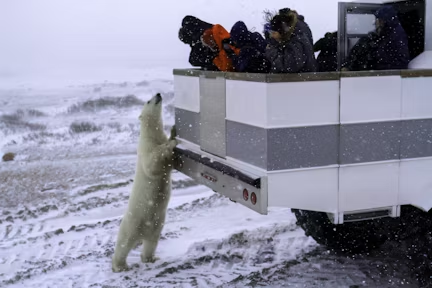
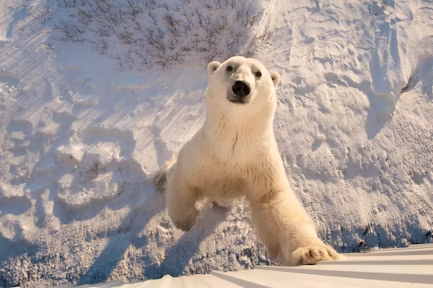
A curious bear approaches a tundra rover

A bear explores the Churchill tundra

Bears can stop the traffic around Churchill

Mothers have to protect cubs against predatory males

Churchill is great for explorers of all ages

A bear waits for the ice to form so hunting can begin

Northern lights over the Churchill tundra in January to March

Leaving Churchill with great memories
There are two options for getting to Churchill now that the train from Winnipeg has come back into service, but it is by charter flight that the vast majority of people travel.
Flights from Winnipeg take around 2¼ hours on board small but comfortable planes. Most packages will include these flights as an add on to the base price of the trip and you land at an airport about ten minutes drive from Churchill itself.

It's all down to the location and a topographical quirk. A detailed map of the region will show that Churchill is located next to a nook in the coastline.
With the anti-clockwise gyre of the northern polar winds this nook is the first part of Hudson Bay to freeze between late November and early December.
The ice is an ideal haul out for seals and it soon also becomes a hunting ground for bears; that's why they gather in numbers and relative peace.
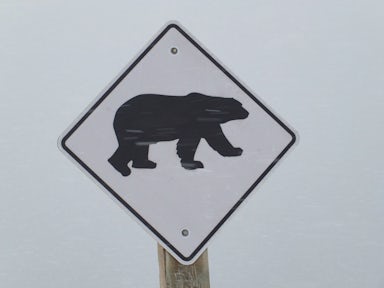
Potential for polar bears ahead
This freeze has another effect in the depths of winter as it locks away the major source of humidity in the region and results is very clear skies.
With that comes sightings of the aurora above the boreal forest. The location has another card to play here, it's directly under the Van Allen belt giving, on average, 300 days a year when the aurora are overhead.
In the summer months when the ice has melted and the Churchill River flows freely beluga whales come to Hudson Bay in their tens of thousands to breed.
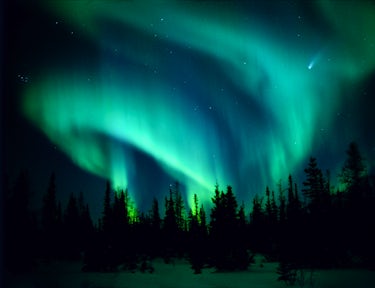
Lights over the boreal forest
With less than 1,000 permanent inhabitants Churchill is a tiny and truly remote frontier town which sits on the confluence of three habitats: Boreal forest, tundra and the Churchill River.
Hunters and trappers still swap skins for cash and you do need to look for bears before you leave a building. For any problem bears there is a solution, they are tranquillised, put in bear jail, safely relocated 40 miles north, or released when the bay freezes over.
Facilities are limited, there's one grocery store, one liquor store and just a handful of accommodation options. The accommodation that is there is perfectly comfortable and you'll get a warm welcome but luxury is not to be expected. Getting supplies to this part of the world where temperatures reach -20C (-4F) in winter is something of a challenge.

Looking out over the Churchill tundra
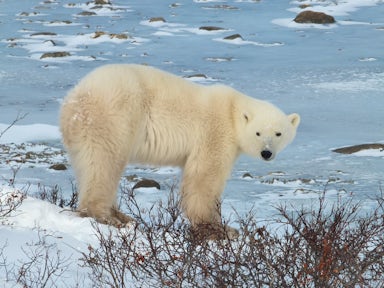
A polar bear in Churchill, the 'polar bear capital of the world'
If, like most visitors, it is the bears that you are planning to see then this is the only time to be there.
If you want the best then we can tell you that ten days either side of 1st November is the optimum window.
At this point, there is a critical mass of bears and the temperatures have dropped sufficiently for them to be active (when it is warmer they can be a touch on the lethargic side).
This is the best time of year, and possibly the best place in the world, to see the Northern Lights. As the aurora range from around 60 to 400 miles above ground level clouds are the biggest enemy of any spotter.
With Hudson Bay frozen and such low humidity in mid winter clouds are far less likely and the location of Churchill under the aurora belt means that sightings are almost assured.
Variable scenery and infrastructure designed for you to see them in warmth and comfort add to the experience.
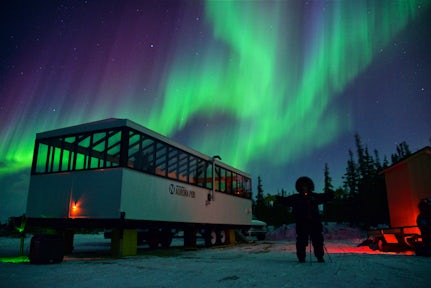
Northern lights over the Churchill tundra
One of the few periods when you don't need serious winter clothing and the ice has melted allowing up to 55,000 beluga whales to gather in the relative safety of the ice free bay.
They are there to breed and calf in shallow waters and away from bears and orca. Around 3,000 congregate near Churchill allowing you to get close up to these vocal canaries of the ocean.
With such short windows for optimal viewing of all of these spectacles, dates can book up well in advance especially for the peak windows.
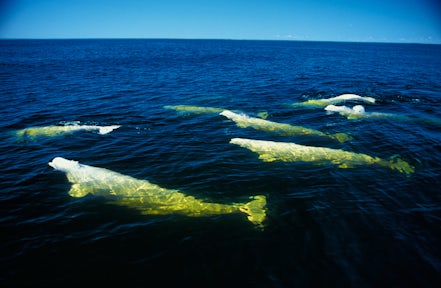
Beluga whales in Hudson Bay
Swoop's part in providing me with a 10 out of 10 trip was, as usual, efficient and trouble-free, and made life very easy in preparing for it. Read the full review
Travelled: November 2018
Val Chiswell - United Kingdom
On our first full day on the tundra we got very close to a mother and her two cubs, and on the second day we got very close to a big male bear. It was a wonderful trip and I would definitely recommend it to everyone. Thanks again for all your help!
Travelled: October 2017
JW - Wyoming, USA
The day starts with a reminder of youth as a school bus collects you from your lodgings early in the morning.
The polar rover station is a short drive from the town and here you will board your home for the day.
With a driver and a experienced naturalist guide, this specially adapted, go-anywhere vehicle will take you into the protected conservation zones which are closely controlled with limited access for licensed vehicles only.
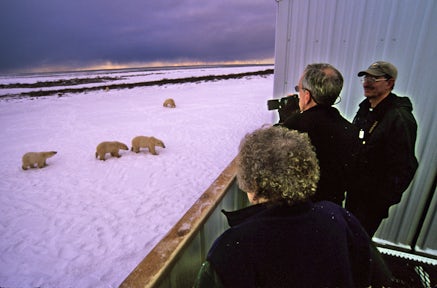
Watching bears from the polar rover station
You'll spend around four hours out on the tundra spotting the bears and learning from your expedition guide about the bear drama that is unfolding around you.
Bears are generally solitary creatures so for so many to be so close to each other creates some unusual displays.
It's not all about the bears though so keep your eyes peeled for foxes, hares and birds as you explore.
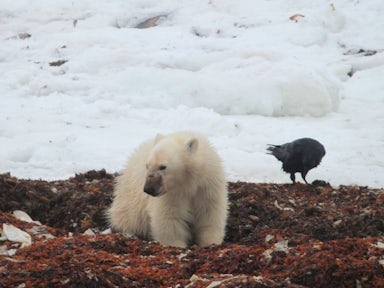
A cub explores the shoreline
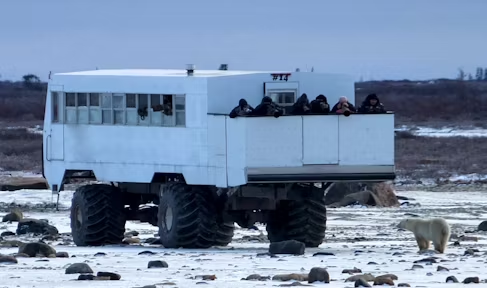
A curious bear approaches a tundra rover
Polar bears are apex predators and are not to be trifled with which means that safety, yours and theirs, is paramount to any trip. To achieve this the best way to view the bears is from a polar rover.
This is, in effect, an adapted school bus with some pretty unique features. For a start, they have been raised up on huge, go-anywhere, tyres.
This not only allows them to explore the tundra but also raises the passengers out of reach of passing bears who can stand at 2.7m (9ft) in height.
To the rear, you will find a viewing platform that allows you to have a clear view of the wildlife without looking through glass.
Under your feet you will find a metal mesh floor so you can see bears walking beneath you too.
Other features include a forward sloping front screen which enables you to look down on anything directly in front of you.
You are going to spend a fair amount of time on board so you'll be pleased to know there is a bathroom!
Unbelievably close encounters
Part of the excitement surrounding any wildlife trip is the unknown – will you see the animal or will it elude you?
Churchill is slightly different in that polar bear sightings are all but guaranteed during your trip.
You can expect to be within 50-70 metres of bears and it is not unusual for bears to pass within a few metres of the vehicles.
If you're really lucky, they will stand up to eyeball you and your fellow travellers, giving you a perfect photo opportunity.
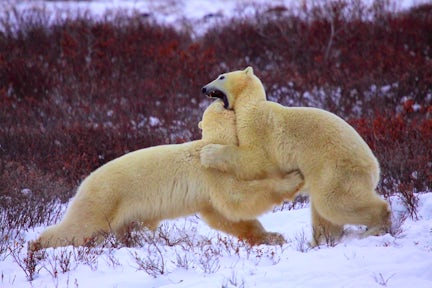
Bear take down
It's simply the interplay of bears with one another. When you have such a large population of animals in close proximity with one another anywhere in the world, you get activity as they 'bump' into one another.
Large males move and displace younger ones and mothers are perpetually worrying about the safety of their cubs as infanticide is a real risk.
It is a fascinating world with many leading characters.
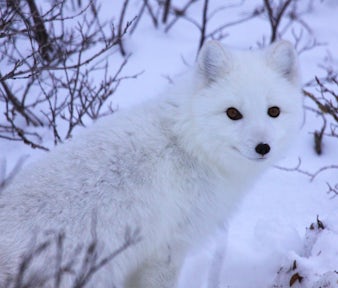
A small arctic fox in the snow
It's not all about the bears, or beluga. Arctic fox and hare are likely to be seen at any time of year.
During the summer months there us also plenty of birdlife from snow bunting and tundra swans to the elusive Ross's Gull.
In fact, there are some 250 species that pass through Churchill during the summer.
Other activities include dog-sledding (well away from the bears!) and a chance to learn about the local cultures and customs of those who live year-round at the edge of the world.
It is also possible to take a helicopter flight over Wapusk National Park, which is otherwise completely off-limits as a favoured denning area for females and cubs in winter.
For sheer intensity, few other experiences in the animal kingdom prepare you for the black eyes of a polar bear staring you down at close range.
Expeditionary cruising is a very practical way to discover the Arctic, allowing you to comfortably explore often untouched areas of wilderness you can’t otherwise reach from …
Discover More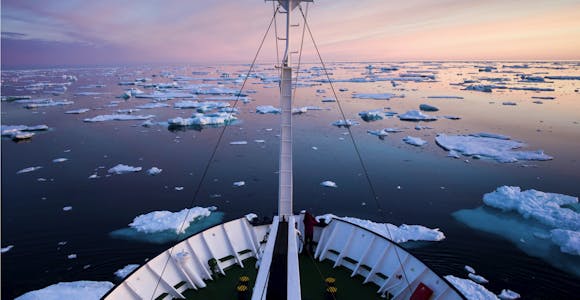
We partner with selected ice-strengthened Arctic expedition vessels from small yachts and nimble little ships with convivial atmospheres, to larger Russian research boats and …
Discover More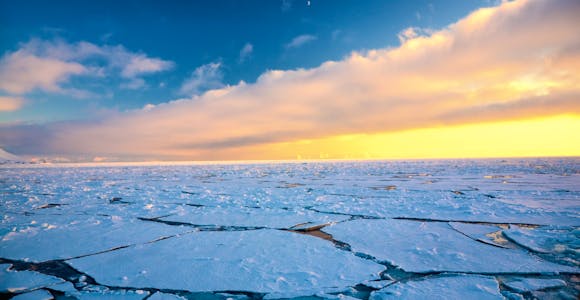
The Arctic summer, blessed with long days and abundant wildlife, is favoured by travellers seeking the classic Arctic experience. But delve deeper and you'll find each season has …
Discover More
Considering a voyage to the Arctic? Since these are truly bucket-list adventures, it's vital to have a clear grasp of the total costs involved. Allow Swoop’s deep polar knowledge…
Discover MoreWhen it comes to wildlife, sightings simply can’t be guaranteed.
However, in places like Churchill in the autumn, where the migration follows a well set and determined pattern, sightings are all but assured.
This depends in which region you are travelling and at what time of year. If you contact us we can guide you through the options.
Churchill is known as the 'Polar Bear Capital of the World' due to the significant numbers of bears that gather there in October and November, waiting for Hudson Bay to ice over again.
In Svalbard you can see polar bears from May to August and in the Northwest Passage during August and September.
Safety is paramount when dealing with any apex predator. Safe sightings can be guaranteed, whether you are viewing from an ice strengthened ship, rubber zodiac or tundra buggy.
We'll spend some time listening to your aspirations, then discuss the kind of experience that might suit you.
Next we'll discuss the options, shortlist the best trips for you and present you our impartial recommendations.
We'll place a 24 hour hold on your preferred option - without obligation - whilst we talk through the details.